Pay in installments of $5.39 with
 ,
 and

Shipping Estimate
USA
- USA
- CAN
- USA
- CAN
Ships within 48 hours · Estimated delivery Nov 2 - Nov 7
 Promo Codes Available:
For Your Every Summer RSVP, with Code: SUMMER15
Description
planting wildflower seeds over grass Overseeding Mix – Add Wildflowers to Existing Grass AreasA response to overgrown grass or neglected areas that could use some native wildflowers A system for increasing pollinator and wildlife value in existing grasslands. Lots of folks contact us wondering what to do with overgrown grassy areas that lack native plants. Often this includes areas that are too big, too difficult, or not economically feasible to completely clear of existing vegetation and start from scratch. After several years of testing at
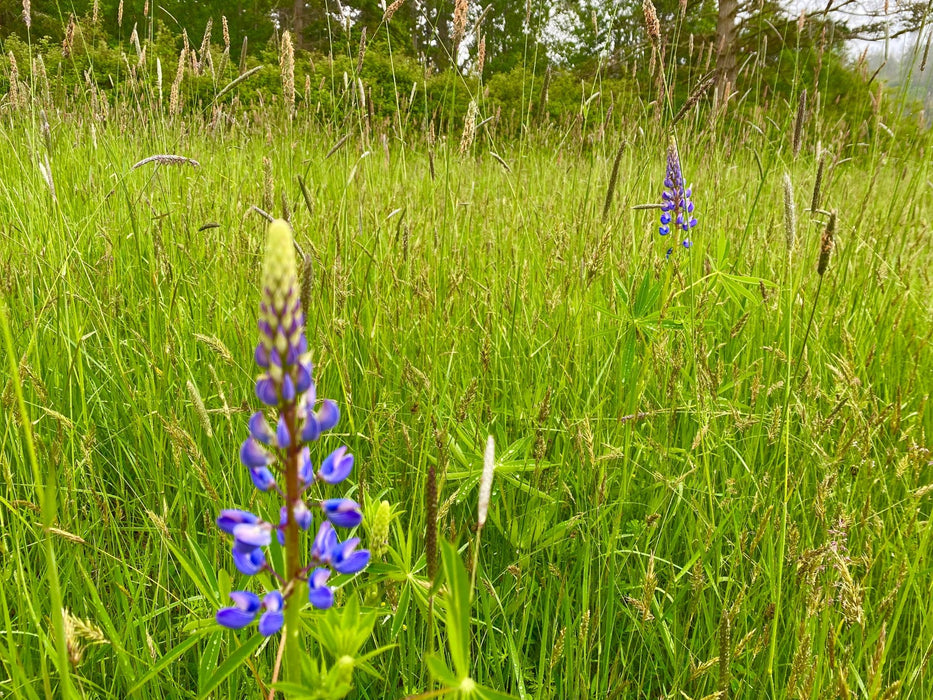
A response to overgrown grass or neglected areas that could use some native wildflowers...A system for increasing pollinator and wildlife value in existing grasslands.
Lots of folks contact us wondering what to do with overgrown grassy areas that lack native plants. Often this includes areas that are too big, too difficult, or not economically feasible to completely clear of existing vegetation and start from scratch.
After several years of testing at multiple sites across the Northwest, we formulated a mix of just wildflowers – specifically the wildflowers we’ve successfully overseeded into existing grass and thatch.
This is a low-cost and low-input option for adding more biological richness to areas such as:
- Old fields
- Roadside ditches and embankments
- Vacant lots
- Post-industrial sites
- Marginal areas previously disturbed by encampments, logging, or construction
- Retired hayfields and pastures (note: this isn’t a mix for livestock)
- Abandoned or overgrown lawns
For best success, and for accurate expectations, please note the following:
1. This is a mix for full sun, or a mix of full sun and partial/dappled shade.
2. No inert material needs to be added before sowing. These are relatively dense, heavy seeds that can work their way down through some thatch to reach and settle upon the soil surface.
3. Progress with overseeding wildflowers into grassy areas can be slow. We recommend repeating the process annually, or at least every few years, if possible. This, combined with optimal installation and management (see below) can slowly change the plant community, adding color, diversity, and biological richness.
4. Overseeding into diverse grass populations (e.g. mixtures of timothy, orchard grass, lawn fescues, sweet vernal grass, etc.) will typically result in more success than overseeding solid monocultures of invasive grasses (e.g. reed canary grass or rat tail fescue).
Installation and Management: Seed should be hand-scattered or mechanically broadcast over the existing grass sward in late summer through early winter.
Initial Site Preparation may consist of the following approaches:
1. OKAY: Seed can be simply scattered into existing grass in late summer. This approach will work best with repeated annual overseeding
2. BETTER: Mow the site with a thatching lawn mower blade in mid-summer to finely chop-up the clippings. Repeated mowing at the lowest possible height is ideal to both break down the clippings and thatch as much as possible, and to open up more bare ground between the existing grass. Then, in late-summer, the site can be overseeded.
3. BEST: Mow the site as low as possible in early fall with a bagging mower, or cut the field for hay, and remove the bagged clippings or hay bales to compost them away from the meadow. Then, overseed the area before significant grass re-growth occurs.
Following the initial first-year seeding, you should perform active ongoing-management of the meadow for best performance:
1. OKAY: Actively watch for and remove aggressive weed invaders such as Canada thistle and blackberry. Continue to overseed the meadow in late summer every year if possible, or at least every few years. Consider adding yellow rattle at a rate of 1-2 packets per 100-sqft to further reduce grass vigor and increase wildflowers.
2. BETTER: Actively watch for and remove aggressive weed invaders such as Canada thistle and blackberry. Mow the site with a thatching lawn mower blade in early fall to finely chop-up the clippings. Repeated mowing at the lowest possible height is ideal to both break down the clippings and thatch as much as possible, and to open up more bare ground between the existing grass. Continue to overseed the meadow immediately after mowing every year if possible, or at least every few years. Consider adding yellow rattle at a rate of 1-2 packets per 100-sqft to further reduce grass vigor and increase wildflowers.
3. BEST: Actively watch for and remove aggressive weed invaders such as Canada thistle and blackberry. Mow the site as low as possible in early fall with a bagging mower, or cut the field for hay, and remove the bagged clippings or hay bales to compost them away from the meadow (composting will allow any viable insect eggs or larva to emerge). Continue to overseed the meadow immediately after mowing every year if possible, or at least every few years. Consider adding yellow rattle at a rate of 1-2 packets per 100-sqft to further reduce grass vigor and increase wildflowers.
A Note on Expectations: Neglected and overgrown grassy areas may have decades of dormant viable grass and weed seed in the soil (hundreds of pounds per acre). Reintroducing native wildflowers into such spaces is a process, not a magic switch. The more active weeding, annual mowing, and overseeding invested in such sites, the more success you will have. Although results can take several years to become increasingly visible – with active weeding, annual mowing, and late season overseeding – most grasslands can be improved.
Seed Mix Contents:
Annual Wildflowers: Farewell to Spring (Clarkia amoena), Spanish Clover (Acmispon americanus), Foothill Clover (Trifolium ciliolatum), White Meadowfoam (Limnanthes alba)
Perennial Wildflowers: Western Yarrow (Achillea millefolium), Great Camas (Camassia leichtlinii), Common Camas (Camassia quamash), Blue Eyed Grass (Sisyrinchium idahoensis), Big Leaf Lupine (Lupinus polyphyllus), Riverbank Lupine (Lupinus rivularis), Selfheal (Prunella vulgaris), American Vetch (Vicia americana), Oregon Sunshine (Eriophyllum lanatum)
Quantity: 1 lb. (enough for 1000 square feet, formulated at 80-seeds per square foot).
Shipping Notes
- Free Standard Shipping on $100+ Orders to the USA.
- Except Preorder products are shipped in 48 hours.
- Delivery to the USA:
- Standard Shipping : 3-10 business days
- If time is of the essence, please consider selecting expedited delivery for faster service.
Exchange/Return Notes
- We offer a 30-day return/exchange service after receiving.
- Final sale items are not eligible for returns or exchanges.
- To process your return/exchange, please contact us at [email protected]
- Please click here for more details>>> Return & Exchange Policy