SKU: 3456539645
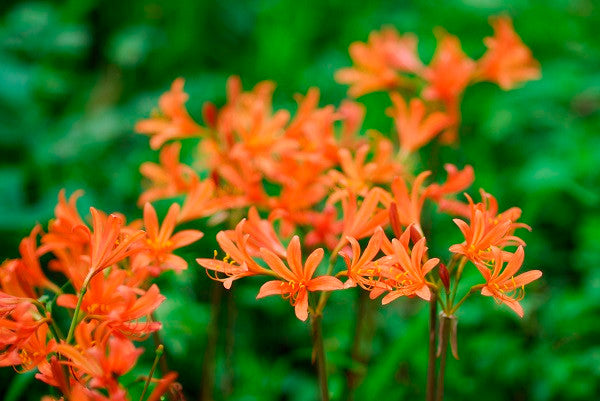
orange spider lily flower

orange spider lily flower Orange Spider Lily (Lycoris sanguinea)

Sale price$18.28 Regular price$20.31
Save 10%

Pay in installments of $5.08 with ShopPay, AfterPay and Klarna

Shipping Estimate
USA
  • USA
  • CAN

Ships within 48 hours · Estimated delivery Nov 3 - Nov 8

Promo Codes Available:

For Your Every Summer RSVP, with Code: SUMMER15

Description

orange spider lily flower Orange Spider Lily (Lycoris sanguinea)The Lycoris sanguinea is often called the "Orange Spider Lily." The blooms are a bright orange that bloom in late summer to fill your garden with color when most blooms in your garden are dying. They really work best in zones 5b 7a because they need a good winter freeze to help them prepare for the next growing season. How they bloom: Lycoris sanguinea "Orange Spider Lily" bulbs bloom differently than most flowers. Now is a perfect time to plant these

The Lycoris sanguinea is often called the "Orange Spider Lily." The blooms are a bright orange that bloom in late summer to fill your garden with color when most blooms in your garden are dying. They really work best in zones 5b-7a because they need a good winter freeze to help them prepare for the next growing season.

How they bloom: Lycoris sanguinea "Orange Spider Lily" bulbs bloom differently than most flowers. Now is a perfect time to plant these bulbs. These bulbs need 1-2 years after they are planted before presenting blooms. Your bulbs are developing a strong root system right now to support future foliage and eventually blooms. You should see the foliage this February - May, but don't be concerned if you don't. Most people still expect to see something growing during the summer months. You won't see anything. These bulbs are dormant in the summer. After 1-2 years, the flowers suddenly appear with the first later summer and early fall rains. One day there is nothing growing and then suddenly you have a surprise, a fully blooming flower! This bulb acts very similarly to red spider lilies, yellow spider lilies, and schoolhouse lilies. Simply put, they bloom in the fall, have foliage for the winter, and are dormant during the summer.

Foliage: Let's talk foliage for a moment. The "Orange Spider Lily's" strap-shaped long foliage will look great by itself in the spring or mixed in with spring blooms. We know that we all want to see the beautiful unusual blooms in the late summer, but the foliage is very important. The foliage is what allows the bulb to grow and multiply. Many people get very concerned if they don't see the bloom the first year that they plant it and believe that maybe the bulb isn't any good. A good rule for perennial bulbs....if the bulb is firm when you plant it, it is healthy and will eventually come up. The foliage is what you watch for since the bulbs aren't going to bloom for 1-2 years. The foliage will grow during the spring months, February - May, so be sure to plant the bulbs where they will receive at least 6+ hours of winter sun. Even if the foliage gets hit by a winter cold snap, it will have taken in nutrients for months! Always allow the foliage to die down naturally and don't cut it off. If you cut it, you are killing the bulb. Once the foliage is completely dead which is usually around the middle of May, this area can be mowed. Remember, it takes a lot of energy for the bulb to push that bloom up out of the ground and open wide. The more time the bulbs can take in nutrients, the more energy they will have for that fall bloom.

Just a thought...if it looks like you are going to have a cold snap and want to protect your foliage, you might consider covering it with a bucket and then removing the bucket once the daytime temperatures warm up.

Blooms: When talking about late-summer color, these orange blooms catch your eye. In late summer, each bulb sends up a 12-16 inch stem that holds several blooms. Each naked stem pops up out of the ground almost overnight. The orange petals are slightly reflexed displaying the yellow stamens within. The blooms will appear late August or early September on a naked stalk like the other Lycoris. It may take 1-2 years before the blooms appear, but the show it produces in late summer is unparrelled. Once established in your garden they are there for a lifetime! These blooms need water to bloom. They respond to the late summer rains well, but if there is a hard drought, be sure to begin watering the area around the beginning of July to help the bulbs have enough energy to bloom. A naked stalk will rise quickly and a few days later the landscape will burst with bright blooms.

Sun Requirements: The single most important thing about landscaping with Lycoris is the sun. They need at least 6+hours of WINTER sun. That means about 6-8 hours of sunlight during the winter months - they do great with full winter sun. Because they are dormant during the summer, the amount of summer sun doesn't usually matter; however, Lycoris sanguinea will keep some of their color better if they get some afternoon shade during their blooming time in August/September.

The Lycoris all have the same requirements of the sun. If you look at the photo above of the Lycoris squamigera "Naked Lady" blooms, you will see that they are in the shade of the trees. You can be sure that most, if not all, of those trees, will lose their leaves in the winter when the greenery needs sunlight. Lycoris put on their foliage during the winter (February - May) and that is when it takes in the nutrients it needs to produce the blooms in September. The winter foliage soaks up sun energy during winter as it prepares for summer dormancy. The foliage normally completely dies down around May.

Plant: Don't plant the bulb too deep. You will plant the bulbs 2-3 times deep the height of the bulb (so if your bulb is 1" tall, then you will plant it 2-3 inches deep). Because they bloom on a naked stalk, they look better when planted in groups. You can plant the bulbs close together (2-4 inches apart) to make the blooms look more natural or spread the bulbs out and allow 6-8 inches in between each bulb. The area will look sparse the first couple of years that the blooms come up, but the bulbs will multiply and fill in several years after that.

Lycoris bulbs really do well in any type of soil except full clay. They thrive in soil that has plenty of organic material mixed in but they do not require fertilizer. Newly planted bulbs would actually be harmed by exposure to fertilizer, so if you are going to apply nutrients, limit the application to established plants when the plants are producing their green leafy foliage during the winter. After planting the bulbs, water the soil thoroughly. Damp soil is ok, as long as the bulbs are in a spot where they will receive plenty of winter sun and the foliage is allowed to die down naturally in the spring. Standing water is not good. Once the summer season starts these bulbs will do best in soil that dries out a bit, as this facilitates its entry into the dormant stage when the leaves die back. This period is followed by its blooming season when it will reward daily watering with long-lasting blooms. Too much moisture in the soil will lead to the bulbs rotting.

Bulbs to use with Lycoris: There are an assortment of perennial flower bulbs that go well with Lycoris blooms. When the bloom appears in late August or early September, it will look great with rain lilies and other spider lilies. The foliage makes a great backdrop for spring bloomers like Narcissus Jonquils, campernelles, twin sisters, and snowflakes.

FUN FACTS:

POLINATORS: Bees, butterflies, and hummingbirds are attracted to the orange spider lily.

"Sanguinea" is a Latin word that means "blood-red" or "bloody" in English. It's often used to describe something that is a deep red color, reminiscent of the color of blood. This term is commonly used in various scientific fields to describe organisms, such as plants or animals, that have a reddish hue.

How to pronounce sanguinea...

  • "san" sounds like "san" in "sand."
  • "gwin" sounds like "gwin" in "gwinnett."
  • "ee" sounds like the letter "e" in "see."
  • "uh" sounds like "uh" in "duh."

So, when you put it all together, it's "san-gwin-ee-uh." The emphasis is on the second syllable, "gwin."

Shipping Notes
  • Free Standard Shipping on $100+ Orders to the USA.
  • Except Preorder products are shipped in 48 hours.
  • Delivery to the USA:
  1. Standard Shipping : 3-10 business days
  • If time is of the essence, please consider selecting expedited delivery for faster service.
Exchange/Return Notes
  • We offer a 30-day return/exchange service after receiving.
  • Final sale items are not eligible for returns or exchanges.
  • To process your return/exchange, please contact us at [email protected]
  • Please click here for more details>>> Return & Exchange Policy
SKU: 3456539645

Discover Niche Categories That Outsell orange spider lily flower

Top-Converting Item to Boost Your Average Order

4.3 ★★★★★
Based on 7 reviews
Sort
Highest Rating
Newest First
Oldest First
Product Reviews
S
Verified Purchase
SEONGJAE KIM
Massapequa, US
★★★★★ 5
[book review] Silent Spring
Format: Paperback
Author of Silent Spring Rachel Carson points out in Chapter 14 that cancer was increasing not only in the general public but also in youth: “The monthly report of the Office of Vital Statistics for July 1959 states that malignant growths, including those of the lymphatic and blood-forming tissues, accounted for 15 percent of the deaths in 1958 compared with only 4 percent in 1900. Judging by the present incidence of the disease, the American Cancer Society estimates that 45,000,000 Americans now living will eventually develop cancer. This means that malignant disease will strike two out of three families (221)”. “Today, more American school children die of cancer than from any other disease. So serious has this situation become that Boston has established the first hospital in the United States devoted exclusively to the treatment of children with cancer. Twelve percent of all deaths in children between the ages of one and fourteen are caused by cancer” (221). Why there were trends of increasing cancer? To answer the question, this paper delves into the 3 causes of cancers mentioned in this chapter - radiation, chemicals, and lack of oxygen for cells. Furthermore, it explores additional important questions it makes us ask. Cancer can be caused by natural sources such as ultraviolet radiation from the sun, radiation from certain rocks, and other similar sources. While Carson admits they are still a factor in producing malignancy, she argues that since these sources have existed for longer than life on Earth and only those who are resistant to them have survived over time, modern-day organisms must have adapted to living with them. In other words, there are likely other reasons for increasing cancer rates besides natural sources. Carson believed that it was especially due to the widespread use of man-made carcinogens in pesticides and insecticides. Compared to natural cancer-causing materials, man-made carcinogens were brand new forms of chemicals that had never existed in the natural environment before, so human beings’ slow biological evolution has not adapted to them yet. Carson not only suggested this logical process but also shared some real-life examples of how humans started to realize that man-made materials can cause cancer. Some of them were due to a lack of knowledge about carcinogens and were somehow inevitable because it was occupational exposure. For instance, in 1775, Sir Percivall Pott declared that scrotal cancer, which was so common among chimney sweeps, must be caused by the soot that accumulated on their bodies. “In the early 1920’s women who painted luminous figures on watch dials swallowed minute amounts of radium by touching the brushes to their lips; in some of these women bone cancers developed after a lapse of 15 or more years. A period of 15 to 30 years or even more has been demonstrated for some cancers caused by occupational exposures to chemical carcinogens” (226). At least these occupational carcinogen exposures were limited to relatively small populations. However, DDT which has produced suspicious liver tumors on animal subjects during laboratory tests and was given the definite rating of a chemical carcinogen by Dr. Huper of the National Cancer Institute, and other insecticides were widely used. Not only the direct exposure to those chemicals are problem but also they don't simply disappear after they're used. They keep following up the food chain, ending up in humans and potentially causing cancer. How do some chemicals cause cancer? German biochemist, Professor Otto Warburg has proposed a persuasive theory. He believes that these chemicals or radiation agents destroy the respiration of normal cells, depriving them of energy. This theory was confirmed in 1953 when other researchers were able to turn normal cells into cancer cells by depriving them of oxygen intermittently over long periods. The impact of these chemicals is not limited to existing organisms; they can also affect unborn babies. This is because babies have rapid cell divisions, making them more vulnerable to the effects of cancer-producing agents that penetrate the placenta and act on the rapidly developing fetal tissues. Dr. W. C. Hueper of the National Cancer Institute has suggested that congenital cancers and cancers in infants may be related to the action of cancer-producing agents to which the mother was exposed during pregnancy. The long latent period of most cancers is the time required for the infinite number of cell divisions during which fermentation gradually increases after the initial damage to respiration. However, since babies are in the process of rapid cell division, they may develop cancer faster when exposed to carcinogens compared to adults. How do we end up surrounded by chemicals that potentially cause cancers to not only living humans but even further unborn babies? Carson wrote - “The chemical agents of cancer have become entrenched in our world in two ways: first, and ironically, through man’s search for a better and easier way of life; second, because the manufacture and sale of such chemicals has become an accepted part of our economy and our way of life” (242). But we can’t just stop developing chemicals to pursue better and easier lives or change our lives back to primitive levels because unsatisfactory is human nature. Then what’s the practical solution? I’ll say regulators with expertise. Just like we are not using toxic chemicals that were used in the past thanks to regulations, regulations should keep monitoring such potential dangers. Therefore regulators must be experts. But this approach isn’t perfect. Moving legislation to phase out the use of such carcinogenic chemicals has been slow which makes “what the public is asked to accept as “safe” today may turn out tomorrow to be extremely dangerous” (224). It's hard to believe that toxic chemicals like DDT were widely used just a few generations ago. However, it's important to consider that similar practices may be occurring today in the world we live in right now. In Professor Handwerk’s words “Now You See It… Now You Don’t.” and we must keep asking what are the DDTs - something harmful but shocking widely used - nowadays. It’s the important question that Carson made us think further about the cause of the cancer.
WAS THIS REVIEW HELPFUL?YesReportShare
Reviewed in the United States on March 25, 2024
S
Verified Purchase
Sergio denny
Carnegie, US
★★★★★ 4
A powerful and influential
Format: Kindle
This is an important and eye-opening read for anyone interested in nature, public health and environmental protection.
WAS THIS REVIEW HELPFUL?YesReportShare
Reviewed in the United States on January 31, 2026
L
Verified Purchase
Liz Cole
Battle Creek, US
★★★★★ 5
A True Mystery Story
Silent Spring is as relevant today as it was 50 years ago. Our ground, our air, our food and we are bombarded with chemicals, carcinogens, products of all sorts to kill weeds and bugs and are capable of killing us. Rachel Carson, a biologist and talented writer, walks us through a litany of misuse and overuse of chemicals that have never been tested for safety to humans. Laws are on the books requiring this testing to be done, but it is disregarded because they make our grass greener, our bugs keel over dead and a lot of people rich. Carson is known best for revealing the reason that Bald Eagle eggs had such thin shells that they broke well before the required incubation before hatching. The drastic reduction is successful Eagle births was DDT. Because this is our national bird and is supported by activists in and out of government, DDT was banned and the eagles began producing young again. We have not been so lucky. This book is factual in a clear and understandable way, and it informs us of the human actions and choices that put us all at risk. No alarmist language is employed, but facts lead us to conclusions that are concerning. The stunning fact to me is that the book was written fifty years ago, and the same risks to humanity and our future are being taken today when we could find better ways of solving problems, more cautious ways of using chemicals and restricting their use in sensible ways. As I talk to people about the issues raised in this book, they have not heard of Rachel Carson and have heard nothing of the assured negative effects on our own health from the chemicals we expose ourselves to daily. We knew so much back then when Carson wrote this book. Why hasn't more been researched and shared with us, so we can have current knowledge of the facts and risks. It is important that Carson's writing not be buried on a dusty shelf. It is a real mystery story and we are the cast.
WAS THIS REVIEW HELPFUL?YesReportShare
Reviewed in the United States on November 23, 2016
M
Verified Purchase
misterbustercat
Lake Worth, US
★★★★★ 5
This should’ve been required reading since the ‘70’s.
Format: Hardcover
It takes a strong writer with a very clear view ( back in the early 60’s) to make a very sciency topic into a gripping read. Ms. Carson broke down a complex scientific relationship between chemicals and the welfare of the planet and those of us who live here.. All of us, down to the microbes. This is a very logical explanation of how all living things are dependent on a clean environment, and how profiteering companies have compromised the health of all life on earth in the name of fewer weeds, attractive produce at the market, and ignoring the failures of the chemical approach that disregards integrated pest management. I promise you that it’s not a boring textbook study. I was a pest control advisor for many years, and had I known then what I know now I’d have trusted less in what I was trained, looking harder into the collateral damage that was created, and pushed harder, sooner, to stop the use of carbamate, organophosphates, and other “harmless” pesticides and carriers that have destroyed a multitude of environmentally sensitive and important components of a healthy ecosystem that we may not recover from in the name of profit. Other than that, it’s light reading!
WAS THIS REVIEW HELPFUL?YesReportShare
Reviewed in the United States on June 2, 2022
A
Verified Purchase
Amazon Customer
West Palm Beach, US
★★★★★ 5
Perfected wisdom
Format: Hardcover
This book arrived on time and in perfect condition.
WAS THIS REVIEW HELPFUL?YesReportShare
Reviewed in the United States on January 9, 2026

recommand products