SKU: 42442700808
genus of snake plant

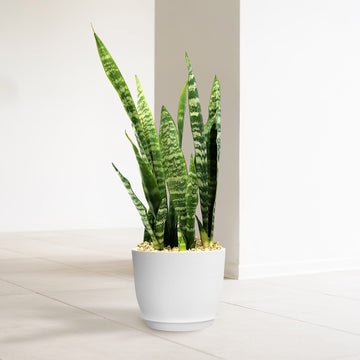
genus of snake plant Zeylanica Snake Plant 'Sansevieria zeylanica' 1 Gal. / Teal / With Pot

Sale price$18.03 Regular price$20.03
Save 10%

Pay in installments of $5.01 with ShopPay, AfterPay and Klarna

Shipping Estimate
USA
  • USA
  • CAN

Ships within 48 hours · Estimated delivery Nov 26 - Dec 1

Promo Codes Available:

For Your Every Summer RSVP, with Code: SUMMER15

Description

genus of snake plant Zeylanica Snake Plant 'Sansevieria zeylanica' 1 Gal. / Teal / With PotIntroducing the Zeylanica Snake Plant, known as 'Sansevieria zeylanica,' a low maintenance snake plant belonging to the Sansevieria genus. The Sansevieria zeylanica has several other common names, such as Ceylon Bowstring Hemp, Vipers Bowstring Hemp, Snake Plant, Mother in Law's Tongue, or Snake Plant, and is very similar to the Sansevieria trifasciata. For its modern look and easy care, the Sansevieria zeylanica snake plant is very popular among

Introducing the Zeylanica Snake Plant, known as 'Sansevieria zeylanica,' a low-maintenance snake plant belonging to the Sansevieria genus. The Sansevieria zeylanica has several other common names, such as Ceylon Bowstring Hemp, Vipers Bowstring Hemp, Snake Plant, Mother-in-Law's Tongue, or Snake Plant, and is very similar to the Sansevieria trifasciata. 


For its modern look and easy care, the Sansevieria zeylanica snake plant is very popular among gardeners.

The Sansevieria zeylanica has long, sword-shaped leaves that grow upright and can grow up to 3–4 feet tall and 2 feet wide.

The leaves are a vibrant shade of green, with light gray-green horizontal stripes running along their length.

This unique pattern adds visual interest and makes it a standout addition to any indoor space.

The flowers of the Sansevieria zeylanica snake plant have tall spikes with small, tubular flowers, typically greenish white, pale green, or cream, that bloom from spring to summer. However, it's worth noting that indoor-grown Sansevieria zeylanica plants rarely flower. These snake plants are more popular for their striking foliage than for their blooms. 

Native to tropical West Africa, the Sansevieria zeylanica plant thrives in bright light to partial shade, making it ideal for indoor spaces. It releases oxygen at night, purifying the indoor air by removing harmful chemicals like formaldehyde and xylene and providing a fresh burst of oxygen while you sleep, making it an excellent addition to your bedroom.

When and How to Water Your Sansevieria zeylanica 

Sansevieria zeylanica is a drought-tolerant succulent that stores moisture in its thick, upright leaves. This adaptation allows it to thrive in dry indoor conditions and makes it very forgiving if you forget to water occasionally. Always let the soil dry out completely between waterings; keeping the roots too wet can lead to rot. This snake plant prefers watering once every 10-14 days in spring and summer, and once a month in the dormant season. 

In the spring and summer, during its active growing season, your Zeylanica will use more water and benefit from deeper but infrequent watering once every 10-14 days. Be sure to adjust your schedule based on the temperature, light, and container size, especially if the plant is receiving bright indirect sun.

In the cooler months or winter, growth slows down and the plant enters a semi-dormant state. At this stage, reduce watering significantly; sometimes as little as once a month is sufficient. Overwatering in winter is one of the most common causes of decline in snake plants, so err on the dry side.

Watch for signs of dehydration in your Sansevieria zeylanica succulent, such as a pale discoloration and the leaves starting to shrivel. This indicates that it's consuming the water stored in its interior. 

Light Requirements - Where to Place Your Zeylanica Snake Plant

When growing indoors, Sansevieria zeylanica can thrive in moderate-to-bright indirect light for at least 6-8 hours a day, such as near a window with filtered sunlight. However, it can also tolerate lower light conditions, like those found in offices or rooms with less natural light.

Just keep in mind that if you place it in a low-light area, your Sansevieria zeylanica may grow more slowly and have less vibrant foliage.

If growing outdoors in warm, frost-free climates, Zeylanica does best in partial shade or dappled sunlight for 4–6 hours of filtered sunlight daily under a pergola or tree canopy. Avoid placing it in direct midday sun, especially in hot zones, as this can scorch or bleach the foliage. 

Remember, it's always a good idea to observe your Sansevieria plant and adjust its lighting conditions accordingly. If you notice the leaves turning yellow or pale, it may be an indication that they're receiving too much direct sunlight. If the leaves become dark green and start to stretch towards the light, it may be a sign that they need more indirect light.

Optimal Soil & Fertilizer Needs 

The Sansevieria zeylanica favors very airy, sandy soil that drains well, and should be fertilized once a year in spring. Planting them in ordinary potting soil will result in compacted roots, stunted growth, and, most likely, root rot. To prevent overwatering, use a terracotta pot with a drainage hole. Instead, make or buy a well-draining succulent potting mix, or ideally, use our specialized potting mix that contains organic mycorrhizae to promote the development of a strong root system that helps your succulent thrive.

When it comes to fertilizing these house plants, organic fertilizers with an equal ratio of 5-10-5 (NPK) also last longer and keep your soil alive by adding other beneficial compounds and microbes that encourage plant health and nutrient absorption. So, skip those harsh chemicals (too much fertilizer) and give your tropical plants some love with some awesome organic fertilizer! 

Hardiness Zones & More

In the United States, this snake plant is mostly an indoor plant, but if you live in southern Florida or Hawaii, then you can cultivate it outdoors in USDA zones 9-11.

If you live in a colder climate outside of these hardiness zones, it's best to keep your Sansevieria zeylanica indoors or treat it as a container plant that you can move indoors during the colder months. 

Remember, this snake plant prefers warmth, so if you do decide to bring it outdoors during the summer months, make sure to place it in a shaded area to protect it from intense sunlight and provide adequate humidity.

The Sansevieria zeylanica is a relatively low-maintenance plant and can tolerate average indoor humidity levels, which are typically around 40–60%. However, it can also adapt to lower humidity levels without any major issues. So, you don't need to worry too much about providing specific humidity conditions for this snake plant.

How to Best Grow Sansevieria zeylanica Indoors

When growing indoors, your Sansevieria zeylanica can thrive in temperatures between 60°F and 85°F. However, it can tolerate slightly cooler temperatures down to 50°F and warmer temperatures up to 90°F. Just be mindful that extreme temperature fluctuations or prolonged exposure to very low or high temperatures can stress the Sansevieria plant.

Wildlife - Sansevieria zeylanica Attracts the Following Friendly Pollinators

The Zeylanica Snake Plant is known to attract bees, butterflies, and hummingbirds with its vibrant flowers and sweet nectar. These pollinators play a crucial role in the plant's reproduction and overall ecosystem health.

Butterflies
Bees
Hummingbirds
Lady Bugs
Multi Pollinators
Other Birds

According to the ASPCA, Sansevieria zeylanica is mildly toxic to both cats and dogs. They contain saponins, which can cause gastrointestinal upset if ingested in large amounts. However, it is safe to touch and handle, making it a popular choice for pet owners looking for a low-maintenance houseplant option.

How to Propagate Your Sansevieria zeylanica Snake Plant

The Sansevieria zeylanica snake plants can be propagated through division or leaf cuttings. To propagate through division, carefully separate the plant into smaller sections with roots attached and replant them in new pots with well-draining soil. For leaf cuttings, simply cut a healthy leaf into smaller sections and plant them in soil to encourage new growth.

Key Takeaways

  1. Sansevieria zeylanica is highly drought-tolerant, storing water in its thick, upright leaves and requiring minimal watering to stay healthy.
  2. This plant can thrive in low-light conditions, making it an excellent choice for offices, bedrooms, and other indoor spaces with limited sunlight.
  3. Sansevieria zeylanica helps improve indoor air quality by filtering out toxins like formaldehyde, benzene, and xylene.
  4. The plant is known for its toughness and resilience, tolerating neglect, temperature fluctuations, and most common houseplant pests.
  5. Its bold, sword-like foliage features silver-green, wavy patterns, adding a modern, sculptural element to home or office decor.

The Bottom Line

Overall, Sansevieria zeylanica is a fantastic snake plant for both indoor and outdoor gardening. With its sword-shaped leaves and low-maintenance nature, it can tolerate lower humidity levels and is suitable for USDA hardiness zones 9–11. Its striking appearance, air-purifying qualities, and resilience make it a popular choice. Whether you're a beginner or an experienced plant enthusiast, the zeylanica snake plant is a great addition to any collection. So, if you're looking for a beautiful and easy-to-care-for plant, give Sansevieria zeylanica a try!

Related Products

You may also like the other popular snake plant varieties, including the moonshine snake plant, the mother-in-laws snake plant, the Cylindrical snake plant, and the snake plant laurentii.
Shipping Notes
  • Free Standard Shipping on $100+ Orders to the USA.
  • Except Preorder products are shipped in 48 hours.
  • Delivery to the USA:
  1. Standard Shipping : 3-10 business days
  • If time is of the essence, please consider selecting expedited delivery for faster service.
Exchange/Return Notes
  • We offer a 30-day return/exchange service after receiving.
  • Final sale items are not eligible for returns or exchanges.
  • To process your return/exchange, please contact us at [email protected]
  • Please click here for more details>>> Return & Exchange Policy
SKU: 42442700808

Discover Niche Categories That Outsell genus of snake plant

Top-Converting Item to Boost Your Average Order

4.1 ★★★★★
Based on 20 reviews
Sort
Highest Rating
Newest First
Oldest First
Product Reviews
M
Verified Purchase
M. Edwards
Cuba, US
★★★★★ 4
Personal Creativity does not equal Domain Transformation
This was a good if not a great book. Its greatest strength lies in the thesis introduced early on and supported throughout that the kind of creativity that leaves a trace in the cultural matrix rests not in the personal creativity of the individual, but in what Csikszentmihalyi tags the "systems approach " to creativity. To have any effect, a creative idea must be couched in terms that are understandable to others, pass muster with the experts in the field (i.e. the gatekeepers to the domain), and be included within the cultural domain (the set of symbolic rules or procedures) to which it belongs. In this systems view, the definition of a creative person is someone whose thoughts or actions change a domain or establish a new domain (pp. 27-28). This is no easy task, especially since he or she needs to learn the existing domain or domains first, and almost always necessitates being in the right place at the right time (e.g. studying quantum physics at the beginning of the 20th century or women seeking academic opportunities when WWII broke out). Having established this in the first 30 pages, if you didn't read the remaining 350 you wouldn't miss much. But I still enjoyed reading the stories and thoughts of selected individuals whom the author deemed as "creative" according to the definition above (However, I disagreed with the selection of a few of these and would have chosen at least one more person of faith in addition to the Quaker who was briefly highlighted. Also on the issue of faith, I found the author's grouping on page 371 of studying the bible with addictive behaviors such as cruising the internet and betting on horse races to be rather laughable!). Some additional personal nuggets I gleaned from this book include the following: 1. Those who persevere and succeed must be creative not only in their manipulation of symbols but maybe even more in shaping a career and a future for themselves that will enable them to survive while continuing to explore the strange universe in which they live (p. 199). 2. When seeking to allow your mind to make new connections in a beautiful setting, just sitting and watching is fine, but taking a leisurely walk seems to be even better. The shaping of one's personal space is also important. The Greek philosophers settled on the peripatetic method, preferring to discuss ideas walking up and down in the courtyards of the academy. When we participate in this kind of "semiautomatic activity" that uses a certain amount of attention, we allow the rest of it to be free to make connections among ideas, often from different domains, well below the threshold of conscious intentionality. "Devoting full attention to a problem is not the best recipe for having creative thoughts. "(p. 138) 3. Both creativity and innovation on the one hand and conservation and traditionalism on the other are both equally important. "Neither uncritical acceptance nor wholesale dismissal of human creativity will lead us far. " (p. 322) The final section deals with how to enhance personal creativity. Some of these ideas were helpful (e.g. to seek to be surprised and to seek to surprise another person at least once every day, to seek to look at problems from multiple perspectives instead of assuming you see the issue clearly from one perspective, etc.) but others just seem to be taking up space on the page. I'm afraid the phraseology of how to use psychic energy more effectively on page 356 and a few other places lost my interest almost completely.
WAS THIS REVIEW HELPFUL?YesReportShare
Reviewed in the United States on November 15, 2010
P
Verified Purchase
pepe
Birmingham, US
★★★★★ 5
interesting analysis of what 'being creative' really means
This easy-to-read absorbing book is based on lengthy interviews with 91 creative individuals ranging from Nobel prize winners to artists to CEOs. Csikszentmihalyi starts by debunking the myth of 'the lone genius having a brilliant idea as if by magic' and defines three necessary ingredients for creativity ('with a capital "C"') - domain, field, and individual. Creativity must take place within a recognised domain (such as physics, painting and so forth); be recognised by experts in that domain (the field, although this may not happen in the individual's lifetime, eg, Van Gogh); and of course come from an individual, although he also adds the painstaking work that precedes and insight, the reality that all creativity builds on what has gone before, and the social elements of the creative process. The book also offers supporting evidence from the lives of the 91 interviewed, which also provides interesting insights into their lives. In many ways, this book is a biography of the creative individual. Also contains a chapter with quite practical guidance on how to live more creatively. Prescient advice for a book published in 1996 given the increasing profile creativity is getting in business and public life. HIghly recommended, one of the most interesting learning experiences i have had in a long while!
WAS THIS REVIEW HELPFUL?YesReportShare
Reviewed in the United States on February 5, 2013
C
Verified Purchase
Charles H. Hooker Jr.
Charlottesville, US
★★★★★ 5
Very enlightening for those who truly appreciate creativity more than cleverness!
Format: Paperback
I love how the author almost redefines creativity .and sheds new light (for me, at least!)on what what real-for-true creativity is and how it benefits individuals and society. It's far more than simply brightening up a room with new wallpaper and curtains -- it describes how genuine creativity requires a thorough working knowledge of the fundamentals of any given field before one can truly create something new or better, and it reveals how those of us who aren't capable of creating something ourselves can yet be part of the process by demonstrating appreciation and support for those who create, whether as sponsors, patrons, or even just ardent fans!
WAS THIS REVIEW HELPFUL?YesReportShare
Reviewed in the United States on July 4, 2023
D
Verified Purchase
Donald Walker
Boise, US
★★★★★ 3
instructive but limited
The testimonies of creative people that give this book its flesh and blood provide fascinating examples of creative people at work. That said, if a journalist had written the book, it would be more readable, and I don't think any less of an intellectual contribution. Moreover, the definition of creativity is elitist and stunts the topic (as observed by other reviewers): "Creativity is any act, idea, or product that changes an existing domain, or that transforms an existing domain into a new one. And the definition of a creative person is: someone whose thoughts or actions change a domain, or establish a new domain. It is important to remember, however, that a domain cannot be changed without the explicit or implicit consent of a field responsible for it." Given the people interviewed, much more needs to be said about the function of social institutions in promoting creativity. Many of the accomplishments lauded in this book would never have happened without grant-making agencies (e.g., NSF, NIH, HHMI) or non-profit employers like research universities and hospitals. To offer just one obvious example of the difference made by one's institutional context, the author had advanced students to help him do his research for this book. The elitism of the definition is even clearer in the role that marketplace plays as a judge of creativity. None of us buys books from amazon.com because some official group validated amazon.com as a good idea. We didn't wait for computer programers to affirm and certify it. Amazon.com is not deemed successful because it impressed its peers. It is successful because millions of us purchase goods through it. Similarly, auto-executives did not make the minivan a successful idea, millions of shoppers did. (Obviously I don't think the marketplace fits into the author's definition of creativity. If 300 million American consumers comprise a domain with 300 million judges, then the word no longer has any useful meaning.) The definition also precludes that countless ephemeral acts of creativity that take place daily. I think instantly of two women I have worked with who were great at holidays. Their clever costumes or decorations brightened my day, adding a little element of surprise and delight. Their acts of creativity don't meet the definitions of this book. The way that creativity is defined in this book is simply a filtering mechanism by which the author selected the people he would interview. It is not a definition of creativity. It is only a description of a subsection of creativity, the kind where institutions provide paychecks to highly practiced individuals to work hard at what they love. I also found little new to take away and apply to my own social existence inside the organization where I work. Perhaps I can summarize my dissatisfaction by observing that the subtitle sets out an agenda for the psychology of creativity, but the definitional filter is intrinsically social. This disconnection sets the book up to fail. So, count this as a negative review, yes, but I did enjoy reading the testimonies of the people interviewed, and the author adds some value in the generalizations he draws. Still, much, much more could have been said.
WAS THIS REVIEW HELPFUL?YesReportShare
Reviewed in the United States on April 30, 2012
J
Verified Purchase
Judith R. Hert
Cuba, US
★★★★★ 5
Wise and Complete
Format: Paperback
I've read a lot of books, too many, on creativity, and this is by far the best, the most complete, the most interesting. The idea that creativity comes out of immersion in a domain or field seems absolutely right and the idea missed by so many other writers. I'm a writer and a painter and I've learned that I'm not going to be any better than the work I've come to know and love, that I have to live in that work. If you want to be a better string player, play with a better ensemble. In many ways a creative person is someone who is in a conversation with what has come before, with work that excites her, teaches her, challenges her. This book makes that plain. But he has other insights as well, especially about the creative personality, the interesting dichotomies. Just read the book.
WAS THIS REVIEW HELPFUL?YesReportShare
Reviewed in the United States on February 22, 2015

recommand products