SKU: 47168909005
psychoactive succulents

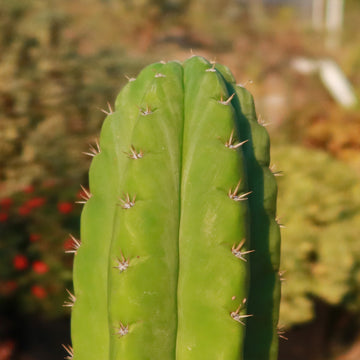
psychoactive succulents San Pedro Cactus 'Echinopsis pachanoi'

Sale price$18.90 Regular price$21.00
Save 10%

Pay in installments of $5.25 with ShopPay, AfterPay and Klarna

Shipping Estimate
USA
  • USA
  • CAN

Ships within 48 hours · Estimated delivery Nov 26 - Dec 1

Promo Codes Available:

For Your Every Summer RSVP, with Code: SUMMER15

Description

psychoactive succulents San Pedro Cactus 'Echinopsis pachanoi'Introducing the San Pedro cactus, also known as Echinopsis pachanoi (Syn. Trichocereus pachanoi) or Trichocereus Echinopsis pachanoi, which is among the superstars of the cactus world. This fast growing columnar cactus is also known as the Wachuma and Huachuma. Standing tall and proud, this magnificent San Pedro cactus columnar beauty can reach heights of up to 20 feet and spread its branches wide, up to six feet! With stems that range from vibrant

Introducing the San Pedro cactus, also known as Echinopsis pachanoi (Syn. Trichocereus pachanoi) or Trichocereus Echinopsis pachanoi, which is among the superstars of the cactus world. This fast-growing columnar cactus is also known as the Wachuma and Huachuma. 

Standing tall and proud, this magnificent San Pedro cactus columnar beauty can reach heights of up to 20 feet and spread its branches wide, up to six feet! With stems that range from vibrant green to mesmerizing blue-green shades, San Pedro is a true showstopper in any landscape. As your San Pedro cactus plant matures, its colors deepen and intensify, adding even more charm to its already captivating presence.  


When the San Pedro cactus flowers bloom, they emit a sweet fragrance that attracts pollinators like bees and butterflies.

The flowers are usually large and trumpet-shaped and come in various colors, including white, cream, and yellow. The petals have a delicate texture and often have a waxy appearance.

The fragrant flowers usually open during the day and close at night. They have a short blooming period, typically lasting for a day or two.

During the blooming season, which usually occurs in late spring or early summer, multiple flowers can bloom at once, creating a captivating sight.

The San Pedro cactus flowers are not only visually appealing but also have cultural significance. In some indigenous cultures, the flowers are used in traditional ceremonies and rituals. They are believed to have spiritual and healing properties.

The San Pedro cactus also has Pitahaya red San Pedro cactus fruits. These fruits are known for their sweet and refreshing flavor, making them a popular choice for consumption. Additionally, they are rich in antioxidants and vitamins, providing numerous health benefits.  

When and How to Water Your San Pedro Cactus 

San Pedro cactus is a drought-tolerant plant that can survive in dry conditions for long periods of time. However, regular watering is still needed to stay healthy. Generally, the San Pedro needs to be watered once every two weeks. During the summer months, when temperatures are high and the plant is actively growing, it may need to be watered more frequently.  

When watering your Trichocereus Echinopsis pachanoi, be sure to soak the soil thoroughly and allow it to drain completely. To prevent root rot and other issues, avoid overwatering. The leaves may become dry and brittle, and the cactus may stop growing if it is underwater. Over time, the San Pedro cacti may start to lose their shape and become misshapen.  

In addition to these physical symptoms, underwatering can also make the cactus more susceptible to pests and diseases. To keep your San Pedro cactus healthy and thriving, it is important to water it regularly and provide it with the right growing conditions. 

Light Requirements - Where to Place Your San Pedro Cactus

When grown indoors, your San Pedro cactus should be placed in a bright, sunny location where it can receive at least six hours of direct sunlight each day.

For outdoor cultivation, the San Pedro cactus requires a lot of sunlight to grow and thrive.

In its natural habitat, this cactus is exposed to direct sunlight for 4-6 hours each day.

If you live in an area with a lot of cloud cover or limited sunlight, you may need to supplement your cactus's light with artificial grow lights.

So, let's give your San Pedro cactus plant what it deserves—just the right amount of light to bloom into the ultimate showstopper! 

But beware; too much sun can lead to burns, so make sure you gradually increase exposure or bring it indoors during a heatwave. And if your Echinopsis pachanoi isn't getting enough light, it'll start stretching toward its source.

Optimal Soil & Fertilizer Needs 

Use well-drained soil that is designed specifically for your Echinopsis pachanoi cactus. These specialty soil mixes have been precisely developed to imitate well-draining desert soils. Commercial cactus soil is affordable and available online or at Home Depot.

Planet Desert specializes in cacti and has a specialty cactus potting mix that contains 5 natural substrates and organic mycorrhizae to promote the development of a strong root system that helps your San Pedro cactus thrive. 

When it comes to fertilizing your San Pedro cactus plant, it only needs a small amount of fertilizer applied once a year in the spring. Cacti prefer fertilizer with lower doses of NPK, with a maximum ratio of 5-10-5 which is higher in phosphorus than nitrogen. Remember, overfertilization can lead to root rot or even the death of the plant, so be cautious! 

Hardiness Zones & More 

San Pedro cactus is a hardy plant that can grow in a variety of different climates. It is native to the Andes Mountains, where it can be found growing at high altitudes in a range of temperatures. In the United States, San Pedro cactus is typically grown in warm, dry climates such as those found in the southwestern states. 

When growing indoors, the San Pedro cactus prefers a warm and dry environment. It thrives in temperatures ranging from 55°F to 75°F. Aim for a humidity level of around 40% to 50% to create an ideal indoor environment for your San Pedro cactus.

For outdoor cultivation, this cactus is hardy in USDA zones 8–11, which means that it can tolerate temperatures as low as 20 degrees Fahrenheit.

If you live in an area with extreme temperatures, you may need to take extra precautions to ensure that your San Pedro cactus Echinopsis pachanoi, stays healthy. 

In addition to its hardiness zone, it is also important to consider the humidity requirements of the San Pedro cactus. This cactus is adapted to dry, arid environments and does not require a lot of humidity to grow. In fact, high levels of humidity can be detrimental to the health of the plant, as they can promote the growth of mold and fungal diseases. 

When growing San Pedro cactus, it is important to provide good air circulation and avoid overwatering to prevent the buildup of excess moisture around the base of the plant.

Wildlife - San Pedro Cactus Attracts the Following Friendly Pollinators

The San Pedro Cactus flowers attract several friendly pollinators such as bees, butterflies, and hummingbirds. These pollinators are essential for the reproduction of the cactus and play a crucial role in maintaining the ecosystem's biodiversity.

Butterflies
Bees
Hummingbirds
Lady Bugs
Multi Pollinators
Other Birds

According to ASPCA, the San Pedro Cactus is safe for humans but can be mildly toxic to cats and dogs if ingested in a large amount. However, it is safe to touch and handle, making it a popular choice for ornamental cactus gardens. However, it is important to keep San Pedro Cactus out of reach of pets to prevent accidental ingestion.

How to Propagate Your San Pedro Cactus

Propagating the San Pedro cactus can be done through seeds or cuttings, but each method has its pros and cons. While cuttings are a quicker option, this method involves cutting off the top of the plant, which permanently alters its tall, elegant columnar form. For this reason, propagation by cuttings is only recommended if the plant has already broken or been damaged. In such cases, you can take a healthy segment, allow it to be callous for about a week, and plant it in well-draining soil to root. However, this approach is less ideal for those who wish to maintain the plant's natural aesthetics.

Seed propagation is a method for cultivating new cacti plants, and preserving their beauty. Harvested from mature cacti's fruit, seeds are cleaned, dried, and sown onto a well-draining soil mix. Despite the patience required, this method allows for healthy plants without compromising the parent cactus's appearance, despite the need for indirect sunlight or grow light.

Key Takeaways

  1. Unlike many other cacti, the San Pedro grows quickly, often reaching heights of 10–20 feet under ideal conditions, making it a popular choice for ornamental gardens.
  2. This cactus is highly adaptable, thriving in a variety of climates and requiring minimal care. It is drought-tolerant, hardy in USDA zones 8–11, and grows well in nutrient-rich, well-draining soil.
  3. San Pedro Cactus is a drought-tolerant that thrives in arid conditions and requires minimal watering. It is a popular choice for xeriscaping and landscaping in dry climates due to its ability to store water in its fleshy stems.

Final Thoughts

Overall, the San Pedro cactus (Echinopsis pachanoi) is a remarkable plant with unique features. It is characterized by its tall, columnar shape and beautiful white or yellow flowers. The cactus can grow to impressive heights, reaching up to 20 feet in optimal conditions. Its spines are relatively short and are arranged in clusters along the ridges of the cactus. The San Pedro cactus is a low-maintenance plant that thrives in well-draining potting soil and enjoys ample sunlight. It prefers a dry environment and can tolerate drought, so it should be watered sparingly, allowing the soil to dry out between waterings.

Don't miss out on this opportunity to add something truly exceptional to your garden. Buy San Pedro cactus for sale today to enhance your collection! 

Shipping Notes
  • Free Standard Shipping on $100+ Orders to the USA.
  • Except Preorder products are shipped in 48 hours.
  • Delivery to the USA:
  1. Standard Shipping : 3-10 business days
  • If time is of the essence, please consider selecting expedited delivery for faster service.
Exchange/Return Notes
  • We offer a 30-day return/exchange service after receiving.
  • Final sale items are not eligible for returns or exchanges.
  • To process your return/exchange, please contact us at [email protected]
  • Please click here for more details>>> Return & Exchange Policy
SKU: 47168909005

Discover Niche Categories That Outsell psychoactive succulents

Top-Converting Item to Boost Your Average Order

4.7 ★★★★★
Based on 16 reviews
Sort
Highest Rating
Newest First
Oldest First
Product Reviews
K
Verified Purchase
K. Gabriel Pagel
Cuba, US
★★★★★ 5
A welcome inoculation to today's bleak outlook on our bodies
Format: Hardcover
Book Review: Love Thy Body: Answering Hard Questions about Life and Sexuality Author: Nancy R. Pearcy Format: Hardback Topic: Christian Thought and Culture Scope: Contemporary Living and Influence in the Culture Purpose: To equip Christian leaders, parents, and students with the tools to know about the "why" and "how" about the current cultures' view on topics concerning our bodies. Structure: The book has an introduction, 7 chapters, and a study guide. 1. I Hate Me: The Rise and Decline of the Human Body (We have inadvertently accepted a flawed view of the body as less real and of less worth than it is in reality) 2. The Joy of Death: "You Must Be Prepared to Kill" (The desire to liberate women from reproduction is based on faulty, dehumanizing reasoning) 3. Dear Valued Constituent: You No Longer Qualify As a Person (When we hold the body as of little value, no one is safe against the dehumanizing effect) 4. Schizoid Sex: Hijacked by the Hookup Culture (Contrary to popular belief the sexual revolution doesn't value the body enough) 5. The Body Impolitic: How the Homosexual Narrative Demeans the Body (When feelings and desires rule our actions and beliefs we deny the more objective grounding of biology to tell us who we are and how we should live) 6. Transgender, Transreality: "God Should Have Made Me a Girl" (Encouraging gender dysphoria and sex changes flies in the face of the objective facts of biology to the detriment of human persons) 7. The Goddess of Choice is Dead: From Social Contract to Social Meltdown (The foundations of the major institutions of society have shifted from biology to social contract) What it does well: *Pearcey is fantastic at making hard material accessible to all audiences. While much of the information in this book could be very academic, Pearcey has gathered scores of illustrations and stories to drive the harder points home. *In every chapter, Pearcey compares and contrasts the current secular view of the body with the biblical view of the body. She shows how the Christian view of the body is more freeing and more complete than our current view. *Similarly, Pearcey also shows how the Christian view is more objective and values the person more highly. *Pearcey clearly shows that often women and children are demeaned and dehumanized through the very ideas and practices meant to free them. This is a huge contention in our society and Pearcey's voice fills a huge need here. *Another thing the book does well is to show how the ideals of the homosexual and transgender movement are really enslaving people to unhealthy gender stereotypes. Instead, if masculinity or feminity is rooted in the unchanging root of biology then we can engage in a whole host of activities without threatening our gender or sexuality *Probably the best part of this book is how deeply Pearcey's love for individual people comes through as she is critiquing some of their most cherished beliefs. What it lacks: *While Pearcey's cultural analysis is fantastic, her philosophy is not quite as steller. I wondered throughout if she had oversimplified some thinkers and seen connections to today's problem that are not necessarily there. I did find that some others (who have more expertise in the area than I) thought similarly: http://www.patheos.com/blogs/eidos/2018/01/love-thy-body-nancy-pearceys-book-brilliant-flawed/?repeat=w3tc . This doesn't harm the overall message of the book, but instead just makes it clunky and a little confusing at points. *While this book was a great hybrid of academic and popular work, I am not partial to the choice for endnotes rather than footnotes. Many publishers choose endnotes in popular works because the reader need not be distracted by the trivia and citing that goes on and I understand that. However, footnotes are much better for those of us who want to seek out sources or understand the material in more depth. That being said, this criticism is cosmetic. Some quick highlights: "My goal in Love Thy Body is to show that a secular morality 'doesn't fit the real universe.'"-11 On fetuses developing into persons: "But there is no scientific evidence of such a transformation--no single, dramatic turning point that can be empirically detected. Embryonic development is a continuous process, gradually unfolding the potentials that were built in from the beginning."-25 "We tend to think sexual hedonism places too much value on the purely physical dimension. But in reality it places a very low value on the body, draining it of moral and personal significance. In the hookup culture, partners are referred to as 'friends with benefits.' But that is a euphemism because they are not really even friends. The unwritten etiquette is that you never meet just to talk or spend time together."-28 "Scripture treats body and soul as two sides of the same coin. The inner life of the soul is expressed through the outer life of the body."-34 "It is true that at death, humans undergo a temporary splitting of body and soul, but that was not God's original intent. Death rips apart what God intended to be unified."-37-38 "The core question in abortion, then, is the status of the human body."-52 "For that matter, even fully developed adults have these traits in varying degrees. When I meet someone who is more intelligent than I am, does that mean they are more of a person than I am--and should have more rights than I have?"-53 "A Christian concept of personhood depends not on what I can do but on who I am--that I am created in the image of God, and that God has called me into existence and continues to know and love me. Human beings do not need to earn the right to be treated as creatures of great value. Our dignity is intrinsic, rooted in the fact that God made us, knows us, and loves us."-55 "The early Christians went beyond simply condemning abortion to providing alternatives--rescuing and adopting children who had been abandoned."-70 "A culture that respects women's bodies will create more flexible career trajectories that allow women to have their families at the time that is biologically optimal. It will create education and work patterns that fit around family responsibilities. When we do that, we will reduce a major motive for abortion."-76 "When human life is no longer seen to have inherent value, it will be subject to purely utilitarian calculation of costs and benefits. Voluntary euthanasia may not remain voluntary."-91 "A fundamental principle of ethics is that people should be treated as intrinsically valuable, not valuable only as a means to some extrinsic end. Or as we say in ordinary conversation, it is wrong to use people."-94-95 "Though evil is still evil, the wonder is that God is greater and can turn it to good."-109 "Today's hookup culture glamorizes impersonal sex but gives no clue how to start a real relationship."-117 "From childhood, young people are awash in sexual imagery, but sexual intimacy is increasingly difficult to achieve."-125 "In a culture that says we have a right to the pleasures of sex, while denying its biological function, many will end up treating babies as the enemy--intruding where they are not wanted or welcome."--150 "Though our feelings are important, Doherty concluded, they are not what define our identity. Nor are they a reliable guide to God's purposes. Because we are fallen and sinful, our feelings fluctuate over time. The most reliable marker of who we are is our physically embodied, God-given identity as male and female."-156 "You cannot be a whole person when your emotions are at war with your physiology."-173 "Our feelings do not define us. Our moral commitments do. We find fulfillment when we find ways to live in congruence with our deepest commitments."-180 "The early church may have been 'on the wrong side of history.' But that's why it changed history."-188 "...you can engage in a range of diverse behaviors without threatening the security of your identity as a man or woman."-198 "The church should be the first place where young people can find freedom from unbiblical stereotypes."-218 "Once a person is convinced that Christianity is true, then they can ask what that means for their sexuality. And only then will they have the spiritual strength and resources to find solutions to their sexual issues."-260 Recommendation?: I highly recommend this book. It is highly needed at this point in our culture. It is a rallying cry to love people with the truth. I especially hope churches start to strategically think through these issues to become havens for those who hurt and are confused.
WAS THIS REVIEW HELPFUL?YesReportShare
Reviewed in the United States on January 22, 2018
D
Verified Purchase
Dr. David Steele
Dallas, US
★★★★★ 5
Love Thy Body
Format: Kindle
The publication of Nancy Pearcey’s book, Total Truth: Liberating Christianity From Its Cultural Captivity sent shockwaves throughout the evangelical world and help equip a new generation of apologists. Total Truth confronted the notion that scientific knowledge and moral knowledge were separated into two domains. The lower story includes objective truths that are public and valid for all people. This is the realm of empirical science. These truths are true and verifiable. The upper story includes the realm of moral knowledge which is private, relative, and subjective. Hence, the so-called unified concept of truth was obliterated and separated into two domains. Pearcey’s subsequent works, Saving Leonardo: A Call to Resist the Secular Assault on Mind, Morals, and Meaning and Finding Truth: 5 Principles for Unmasking Atheism, Secularism, and Other God Substitutes have also left an indelible mark on the church and culture at large. The impact of these books on me personally, cannot be overstated. My suspicion is that many people would concur. Nancy Pearcey’s newest offering, Love Thy Body: Answering Hard Questions about Life and Sexuality pick up where the other titles left off. The overarching goal of Love Thy Body is to “uncover the worldview that drives the secular ethic.” Ultimately, the book is designed to “show that a secular morality doesn’t fit the real universe.” Readers familiar with Pearcey will quickly see the influence of Francis Schaeffer on her thought. It was Schaeffer who originally exposed the so-called “fact/value” split which has created a fracture epistemology that continues to be propagated today. Pearcey shows the practical outgrowth of this fragmented worldview (or the two-story worldview) by pointing to several contemporary culture matters including abortion, euthanasia, “same-sex marriage,” and transgenderism. She helps readers understand how these various worldviews have been smuggled into our culture and links each of them to the two-story dichotomy. Readers will be encouraged and challenged to walk through the argument of Love Thy Body and will be better equipped to not only contend with culture but also reach out to people who have been deceived by a pagan worldview. Readers will discover that Pearcey’s argument is not combative. Rather, her heart cries for people who have been co-opted by this deviant worldview. She pleads with readers to reach out and love people with Christ-centered love: “Christians must present biblical morality in a way that reveals the beauty of the biblical view of the human person so that people actually want it to be true.” Love Thy Body is a book that is filled with description and prescription. Facts and figures run through the book but the author is not content to leave her readers with data alone. She sets forth a workable prescription which is set on helping people and healing them at the deepest level. Therefore, “We must work to educate and persuade on a worldview level,” writes Pearcey. Such an approach is imperative if Christ-followers have any hope of reaching a lost world with the saving message of the gospel. Running through the book is a mindset that Pearcey, no doubt, learned from Schaeffer, namely, sharing the gospel with a tear in one’s eye. Love Thy Body is riveting, challenging, educational, a shot to the heart, a challenge for the mind, and bold push for the feet. It will spark controversy in some venues and may even precipitate debate in the local church. Surely, this kind of debate is necessary as Christians seek to influence culture for God’s glory. I received this book free from the publisher. I was not required to write a positive review.
WAS THIS REVIEW HELPFUL?YesReportShare
Reviewed in the United States on January 17, 2018
J
Verified Purchase
J Crutchfield
Phoenix, US
★★★★★ 5
Getting past the noise to a holistic view of the person
Format: Hardcover
In order to have effective conversations about difficult and controversial subjects such as abortion, euthanasia, and sexual ethics it is important for both parties to be on the same page. Otherwise, it is easy to make assumptions about the other person’s motives and end up talking past each other. Discussions turn into arguments where name calling and personal attacks are more common than a reasoned and thoughtful exchange of ideas. In my own experience, it has been difficult to speak up about many of these types of sensitive subjects in public because of fear that I will be labeled intolerant or bigoted. In fact, it appears our culture, as a whole, has descended into a shouting match where the loudest voice is either the secular one screaming about trigger words and safe spaces where no one can challenge your views, or a caricature of Christianity which writes off everyone who disagrees as a hopeless reprobate who is going to hell. In this cacophony, the Christian message of God’s redeeming love for humanity is drowned out in a sea of empty words. Voices shouting past one another, convincing only those who already agree with us. This situation that many Christians find themselves in, unable or unwilling to speak for fear of being attacked and shouted down is why the new book by Nancy Pearcey Love Thy Body is so important. I have been blessed to be part of both the manuscript review and the book launch team for this amazing book and I have to say that this may be one of the most important books for all Christians to read, especially those who wish to be more effective in the public sphere. Over the course of seven very accessible chapters she addresses the most pertinent issues of our times, from abortion, and assisted suicide to the hook up culture and the LGBTQ movement which is sweeping our nation and exposes a fatal flaw in the secular narrative. This flaw that runs through all of these issues is a fractured view of the person which splits apart the body and the mind. What results is a negative view of the body which tramples on human rights and dignity. The secular narrative is that the Christian view of the person is repressive and prudish, often denigrating the authentic self. They want to claim the high moral ground because their view is based on love and acceptance. Nancy’s book gives us the tools to get past the walls and barriers built up by secular buzz words such as “death with dignity,” “marriage equality,” and “pride” to the underlying worldview so we can be on the same page as those we are speaking with. In her words: “As we face the social ills of our own day, we must move beyond denunciations that can sound harsh, angry, or judgmental and instead work to show that the biblical ethic is based on a positive view of the body as part of the image of God.”
WAS THIS REVIEW HELPFUL?YesReportShare
Reviewed in the United States on January 2, 2018
M
Verified Purchase
Mark Scholten
Port Orchard, US
★★★★★ 5
Clear thinking on contemporary confusion about our bodies.
Format: Hardcover
We live in a sound-bite society. A 30-second commercial exceeds our attention span unless it is cute, provocative, catchy or unusually funny. Many cannot sustain a thought longer than the time it takes to breathe. Our convictions are strong, they are popular, but they are typically backed by only a thin layer of thought. How can so many be wrong? I will go with the flow of the cultural consensus. As a new Christian, I read “The Christian Mind,” by Harry Blamires. It convinced me that Christians should think. Perhaps true Christianity begins as an admission of sin and an experience of the love and grace of God that we call conversion, but that is only the beginning. We are welcomed into a new found wealth of wisdom for living in God’s world. Growing holiness is the long, slow and sometimes painful journey back to Eden and the way things were meant to be. The Christian life involves the mind and living by revealed convictions. Yet, almost everyone in our culture today lives by a set of convictions of their own. They live by a set of self-discovered rules, ultimate convictions about life, love and the way things are supposed to be. They construct their own ethics out of these convictions. This ethic is fiercely held and savagely defended, but the foundation is very thin. The culture wars are fought on the worldview battlefield. It is the ethics behind the conviction and the thinking behind the thought that needs to be examined, challenged and ultimately changed. When we confront a non-Christian with the holes in their worldview; when we apply thought and fact and truth and history to their ultimate convictions we are shouted down with angry rhetoric. The thinking behind most practical worldviews is paper thin and ill-founded. And when the law of unintended consequences bites them they do not know why. We need to show them why. Christian apologetics is the intentional deprivation of another’s ‘God-Suppressor.” They know God, but they suppress that truth down because of their independent ethic and their perceived freedom in sin. Yet, it is God’s world and his rules apply. Reality bites and apologists show them why. Nancy Pearcey is a worldview apologist. Christians ought to live by a set of revealed convictions about God and man and truth and law and ethics. We are radically different from the world around us because we grow, like plants, out of another kind of fertilizer. We are nourished by divine wisdom. All the treasures of wisdom and knowledge are in Christ. (Colossians 2:3) In many ways, I cut my spiritual teeth on the writings of Francis Schaeffer. Through him, I learned to think like a Christian, and that the Christian need not be ashamed of his intellectual heritage. Now that my teeth are cut, I brush them with Nancy Pearcey writings. She is the echo of Schaeffer updated and applied to the modern world that Schaeffer prophetically warned us about. Her latest book, "Love Thy Body", applies the Christian mind to contemporary issues regarding our bodies. (Abortion, infanticide, euthanasia, transgenderism, stem-cell research, sex, marriage, and homosexuality.) It shows how to understand the thinking of the modern world and apply logic, fact, research, from a Christian mind to the hot-button issues of the day. It is a book that you really should read. It will make you think; like a Christian.
WAS THIS REVIEW HELPFUL?YesReportShare
Reviewed in the United States on January 3, 2018
M
Verified Purchase
Myratfink
Louisville, US
★★★★★ 5
One of my all time faves and most-recommended books
Format: Paperback
I've read and re-read this book, shared with my spouse and children, and we collectively have purchased several copies with the intent to share. The author is incredibly educated, clear and concise, and spiritually gifted. She introduces revolutionary ways of looking at things that seem so obvious when she lays the scriptural groundwork you're probably already familiar with. It's like a combo of "yeah, DUH!!!" along with "HOW did I never see this??" In todays world with so many personal conflicts and confusing issues, Nancy will sharpen your understanding and resolve, and give you the tools to hold valuable and productive conversations with your loved ones. We are now branching out to other book in her repertoire and finding them similarly ground-breaking.
WAS THIS REVIEW HELPFUL?YesReportShare
Reviewed in the United States on May 27, 2025

recommand products