Pay in installments of $5.18 with
 ,
 and

Shipping Estimate
USA
- USA
- CAN
- USA
- CAN
Ships within 48 hours · Estimated delivery Nov 2 - Nov 7
 Promo Codes Available:
For Your Every Summer RSVP, with Code: SUMMER15
Description
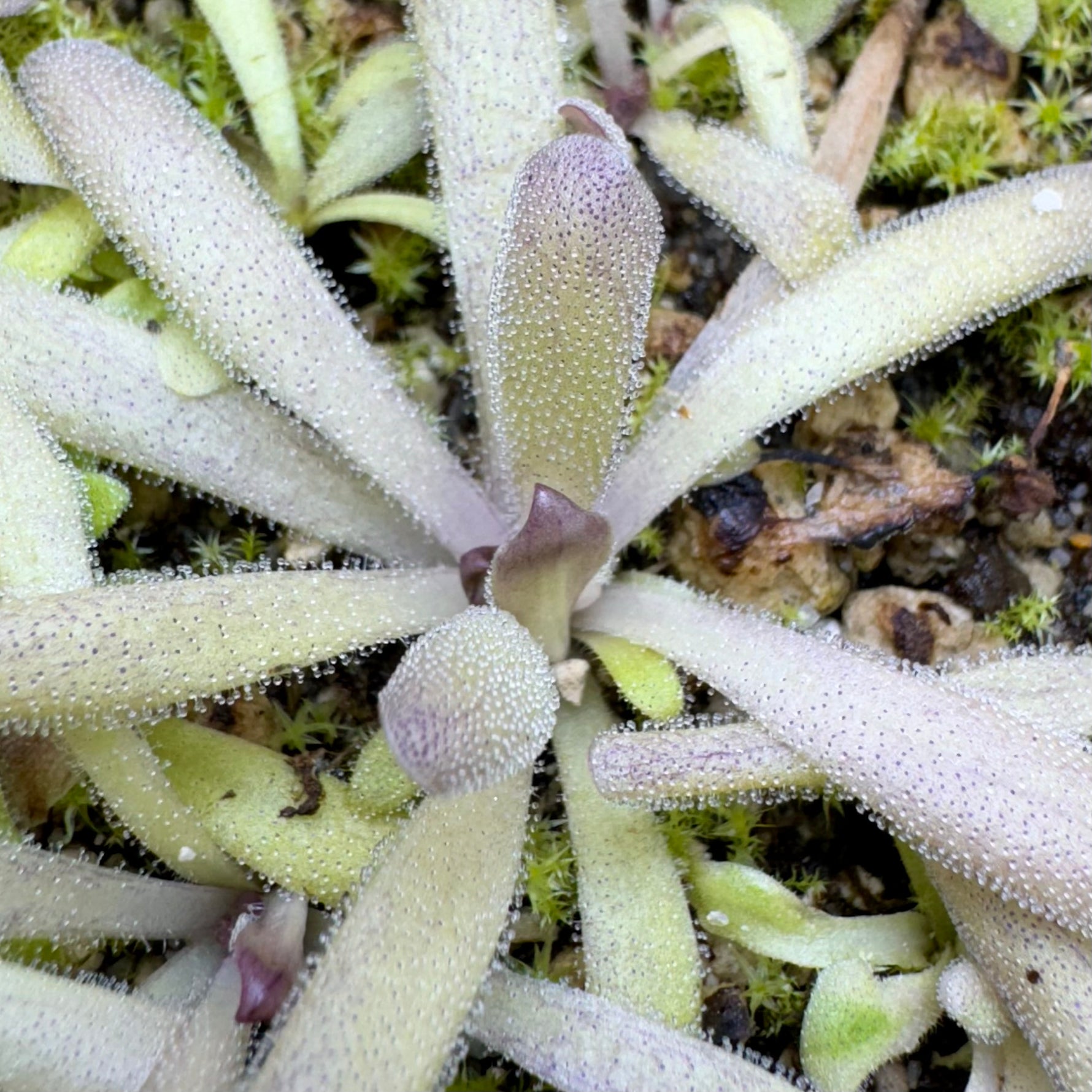
pinguicula succulent phase Pinguicula x “Twilight Sparkle” BARE ROOTThis new release for 2024 is highly anticipated by everyone at CalCarn! Pinguicula x Twilight Sparkle is an absolutely stunning new cyclosecta hybrid! These plants were so purple in our tissue culture lab jars that Damon couldnt wait to see them grow out! Long, ridiculously dew covered leaves emerge from an eggplant purple crown of tight leaves. Each leaf glows a soft purple, with the edges deepening in color. Grow it under strong light to encourage
This new release for 2024 is highly anticipated by everyone at CalCarn! Pinguicula x “Twilight Sparkle” is an absolutely stunning new cyclosecta hybrid! These plants were so purple in our tissue culture lab jars that Damon couldn’t wait to see them grow out! Long, ridiculously dew-covered leaves emerge from an eggplant purple crown of tight leaves. Each leaf glows a soft purple, with the edges deepening in color. Grow it under strong light to encourage that deep purple color!
These are long, straight-leaved plants that are delicate and about the size of a quarter; we don’t expect them to grow much more than three inches across at the absolute maximum, so expect them to be on the smaller side.
The plants we are shipping are about the size of a quarter and will be 2-4” at full growth. These plants often stay in winter succulent stage well into summer so you may receive one with only a few carnivorous leaves or even fully succulent well into the year! PLEASE NOTE WINTER SUCCULENT ROSETTES ARE DARK PURPLE!
This plant will not come potted; you will need to pot it up upon arrival. Mexican/Tropical Pinguicula prefer our sandy PINGUICULA SOIL MIX.
IF YOU ORDER IN WINTER/EARLY SPRING YOUR PLANT MAY ARRIVE IN WINTER SUCCULENT MODE. DURING THIS TIME, IT WILL GROW SUBSTANTIALLY SMALLER, TIGHT, SUCCULENT LEAVES. DO NOT OVER WATER DURING THIS TIME. IT WILL GROW CARNIVOROUS LEAVES IN THE SPRING.
Care Instructions
Growth Habit: Pinguicula are generally small plants; depending on the species and growth phase, they can range from 1/2” to 8” across at maturity. Most are 2-4” across. They form rosettes of leaves covered in glistening dew, which have a high turnover rate, meaning that they die back frequently, and new leaves grow at the center from the plant. They have pretty leaves, some blush red or purple, and all are covered in sparkling dew. Their flowers are hummingbird and butterfly pollinated in the wild and because their pollinators are attracted to colorful flowers, they have beautiful flowers With long neck spurs! Many species will experience a winter succulent phase. A combination of shorter photo periods, cooler temperatures, and dryer conditions trigger this phase. While this phase is not necessary for the plant to thrive, it is often out of our control whether the plants do this or not. During their succulent phase, they grow small, rounded leaves that look very different from their large carnivorous leaves. Plants in this stage will be significantly smaller than they will be in carnivorous growth. The natural cycle of Pinguicula can lead them to be in succulent growth in spring, not starting their carnivorous growth until late spring sometimes even early summer. Watching them grow their carnivorous leaves is like watching a magic trick; tiny, tight leaves begin to transform into huge, sticky, carnivorous leaves! Pinguicula can easily propagate from leaf pullings, like a succulent. They will also form small clumps over time, dividing naturally. While they can have a long life, they won’t live forever, so it is a good idea to take pullings every year. They do not have significant root systems, and the roots they have are often minimal and very short. The roots can be white, transparent, or brown, and they use these roots mainly to anchor themselves to the soil's surface (they still offer benefits, though, so please do not cut them off).
Sun: Full to part sun. Sunny windowsills indoors, in a temperature-regulated greenhouse, or under grow lights. In tropical parts of the world or very mild climates, they can be grown outdoors in dappled sun, morning sun only, or under shade cloth. They must be protected from the full afternoon sun. It is best to grow under 30% shade cloth in the summer months when grown in a greenhouse. They can benefit from 30% shade cloth if grown outdoors as well. If your plant is much greener than it should be, developing larger, more elongated leaves than normal for the species or hybrid, and does not have much dew, it may need more light.
Water & Humidity: In the late spring, summer, and early autumn, Pinguicula can be kept in the tray system with overhead watering as long as they still have carnivorous foliage. This means setting the pots in a deep saucer or tray and routinely filling that with 1/4”-1/2” water. If grown in a non-draining pot, allow room to water and water overhead frequently to keep soil media moist, but do not water so deeply as to have standing water sitting on the surface of the soil; all the water should be absorbed. When the rosettes show their very first signs of growing their smaller, tighter succulent leaves immediately begin to dry out your plants. Keep the soil on the dry side, watering them only a little and let dry out in between watering. You can usually tell how dry a species enjoys its winter by the size of its succulent leaves. The tighter, smaller leafed rosettes such a Pinguicula gypsicola or the bulb-like heterophylla and macrophylla require bone-dry conditions. Species with larger winter leaves, like a few of the moranensis varieties or agnata, enjoy winters soils just slightly damp. Cuban species should be kept wet year-round, with only slight winter drying. When these plants are transitioning between carnivorous and succulent growth they are at the most risk of rotting, so it is better to air on the side of drier when the temperatures start to get colder and the photo periods shorten. In spring, as soon as the temperatures start to warm and the photo periods lengthen, start watering your plants more. When carnivorous leaves start to grow, begin the tray method again. (If your plant decides it does not want to make carnivorous leaves, don’t worry, sometimes they are stubborn! Water frequently and make sure your plant gets lots of light, preferably some natural light from the sun as well, to try to trigger carnivorous leaf growth. But don’t worry if your ping stays in succulent mode for a whole year, eventually it will grow carnivorous leaves again!) Pinguicula are extremely susceptible to dissolved minerals and salts in their water and poor water quality will directly contribute to decline of plants and death. Be sure to only use rainwater, reverse osmosis water, or distilled water. Pinguicula prefer drier conditions and do not require high humidity.
Temperature: 50 degrees - 90 degrees. While not ideal, Pinguicula can tolerate brief nighttime dips to 40 as long as daytime temperatures warm back up and can tolerate brief heat waves over 90 as long as they are protected from the sun and sitting in water AND nighttime temperatures decrease. Cold temperatures are likely to kill Pinguicula, so avoid exposing them to anything below 50 if possible.
Dormancy: No true dormancy but does have a winter succulent phase during which the plant will produce small succulent leaves instead of flat sticky leaves. Pinguicula do not need this period of succulent growth to grow well. If your plant does not grow succulent leaves, there is no need to try to induce the transition. See the section on watering for in depth care during this time.
Fertilizer: Apply Schultz Cactus Fertilizer once or twice a month to the leaves with a mister bottle, during the grow season. Do not apply in winter or during succulent winter mode. We use seven drops of fertilizer in 20 ounces of distilled water.
Soil & Repotting: Pinguicula grow in very dry and rocky soil mixes, do not use a mix that holds a lot of moisture. We use equal parts sand, peat moss, pumice, and perlite. You can order our custom Pinguicula soil mix! These plants ship bare-root so you will have to order potting media and pot them up upon arrival. Pinguicula do not have extensive roots and anchor to the surface of their soil making them ideal candidates for quirky, cute, small, non-draining planters like teacups or vintage pottery. You can plant them in all variety of pots as long as they are glazed ceramic, glazed terracotta, glass or plastic. Avoid un-glazed terracotta. They can be in small pots and do not need much room for roots. Pinguicula are one of the most sensitive plants to a build of minerals and salts in their soil or water. Repot every year to refresh soil.
More Information: For more information on repotting, pests, growing habits, and more, check out our FAQ page or our YouTube channel!
Shipping Notes
- Free Standard Shipping on $100+ Orders to the USA.
- Except Preorder products are shipped in 48 hours.
- Delivery to the USA:
- Standard Shipping : 3-10 business days
- If time is of the essence, please consider selecting expedited delivery for faster service.
Exchange/Return Notes
- We offer a 30-day return/exchange service after receiving.
- Final sale items are not eligible for returns or exchanges.
- To process your return/exchange, please contact us at [email protected]
- Please click here for more details>>> Return & Exchange Policy