SKU: 69807754428
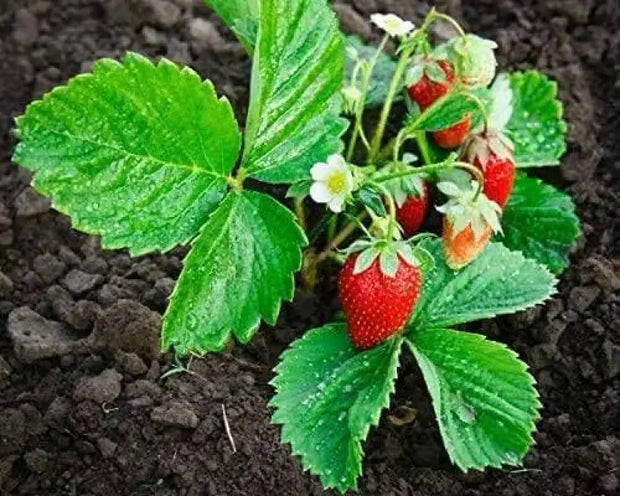
organic strawberry seeds for planting

organic strawberry seeds for planting 2 pack x 1200 seeds Organic Strawberry Seeds for Year-Round Planting

Sale price$23.14 Regular price$25.71
Save 10%

Pay in installments of $6.43 with ShopPay, AfterPay and Klarna

Shipping Estimate
USA
  • USA
  • CAN

Ships within 48 hours · Estimated delivery Oct 31 - Nov 5

Promo Codes Available:

For Your Every Summer RSVP, with Code: SUMMER15

Description

organic strawberry seeds for planting 2 pack x 1200 seeds Organic Strawberry Seeds for Year-Round PlantingTL; DR (AI Summary) 2400 organic strawberry seeds (Fragaria vesca & everbearing) for year round container gardening; ideal for small spaces like balconies and patios, with berries ready in 6090 days. Best for: Urban balcony gardeners Best for: Families with kids Best for: Home cooks wanting fresh berries Best for: Container and hanging basket growers Not suitable for: Large scale commercial farming Not suitable for: Indoor only growing without

TL;DR (AI Summary)

2400 organic strawberry seeds (Fragaria vesca & everbearing) for year-round container gardening; ideal for small spaces like balconies and patios, with berries ready in 60–90 days.

  • ✅ Best for: Urban balcony gardeners
  • ✅ Best for: Families with kids
  • ✅ Best for: Home cooks wanting fresh berries
  • ✅ Best for: Container and hanging basket growers
  • ❌ Not suitable for: Large-scale commercial farming
  • ❌ Not suitable for: Indoor-only growing without sufficient light
  • ❌ Not suitable for: Immediate harvest (requires 60–90 days)

Key Features:

  • Seed Count: 2400 seeds (2 packs of 1200)
  • Variety: Organic Fragaria vesca & everbearing types
  • Growing Locations: Hanging baskets, containers, patios, balconies
  • Time To Harvest: 60–90 days from sowing
  • Climate Adaptability: Perennial in cooler zones; everbearing annual in warm climates


Grow Your Own Strawberry Seeds (Fragaria vesca & everbearing varieties) – Sweet, Fragrant Homegrown Berries for Hanging Baskets, Container Patios & Urban Balcony Gardens Nationwide

Strawberry seeds (especially alpine and everbearing types like Fragaria vesca) let you grow true-to-type, intensely flavorful berries that taste far better than store-bought. These compact, runnerless or low-runner plants produce sweet, aromatic fruit from late spring through fall — perfect for fresh eating, smoothies, jams, and desserts. They thrive in small spaces: hanging baskets, window boxes, 5–10 gallon pots, or vertical planters. No big yard or raised beds required!

Ideal for urban home cooks, balcony gardeners, families with kids, and anyone wanting pesticide-free, ultra-fresh strawberries straight from their own space. In Chicago and cooler zones they grow beautifully as productive perennials in containers; in warmer southern states they perform as everbearing annuals with afternoon shade.

Step-by-Step Growing Guide (Seed to First Berries in 60–90 Days)

  1. Seed Prep & Sowing
    Tiny seeds — cold stratify for best results (place seeds in moist paper towel in fridge for 2–4 weeks). Surface sow (do not bury) on moist, sterile seed-starting mix; they need light to germinate. Keep at 65–75°F. Germinates in 14–30 days.
    • Nationwide timing tip: Start indoors 8–10 weeks before last frost. Chicago/Midwest/Northeast: late February–March. South/Southwest: February or direct sow once soil warms. West Coast: almost any mild month.
  2. Planting & Container Setup
    Full sun (6–8+ hours) or light afternoon shade in hot climates. Use well-draining, rich potting mix in 5–10 gallon pots, hanging baskets, or strawberry jars. Space 6–8 inches apart. Excellent drainage prevents crown rot.
  3. Germination & Early Care
    Keep soil evenly moist (mist gently) until sprouts appear. Thin or transplant once true leaves form. Light balanced fertilizer every 3–4 weeks after first true leaves. Protect young seedlings from slugs and birds.
  4. Growth & Maintenance
    Plants form neat mounds (6–12 inches tall) with few or no runners on alpine types. Mulch with straw to keep fruit clean and retain moisture. Consistent watering (never soggy) and occasional feeding keep production high. In Chicago summers they love balconies; in southern heat provide shade cloth during peak afternoon sun.
  5. Harvesting
    Pick fully red, fragrant berries when they easily detach. Harvest every 1–2 days for continuous production. Everbearing varieties keep fruiting until first hard frost. Save a few berries for next year’s seed saving!

Pro Tip for Every State: Grow in hanging baskets or containers for easy mobility — move to shade in heat waves or bring indoors before frost in Chicago. Vertical or stacked planters maximize tiny balconies.

Easy Strawberry Recipes for Home Cooks

  • Fresh Strawberry Balsamic Salad: Sliced berries with greens, goat cheese, and balsamic glaze.
  • Homemade Strawberry Jam or Freezer Jam: No pectin needed with these sweet varieties.
  • Strawberry Shortcake or Smoothies: Classic shortcake or blend with yogurt and banana for a quick breakfast.
  • Patios” rank fast.

Important Note: Strawberry seeds can take patience (slow germination), but the reward is superior flavor and true-to-type plants. Grow in containers everywhere to manage space and soil quality.

🍓🌱

Key Benefits

  • Sweet red berries from seed-grown plants
  • Compact plants – suitable for containers and hanging baskets
  • Cold stratification recommended for best germination
  • First fruit: 4–6 months from germination
  • Perennial – plants produce for 3+ years

How to Grow

  1. Cold stratify: freeze seeds 2–4 weeks before sowing
  2. Sow on surface of moist seed-starting mix; seeds need light
  3. Keep at 60–70°F; germination in 2–6 weeks (variable)
  4. Transplant seedlings when 2–3 inches tall; space 8–12 inches
  5. Plant in full sun with rich, well-draining soil
  6. Pinch first flowers to strengthen plant; allow later blooms to fruit

Specifications

Quantity: Type: Organic strawberry (variety may vary). First fruit: 4–6 months from germination. Spacing: 8–12 inches. Sun: Full sun (6+ hours). Lifespan: Perennial (3+ years). Cold stratification: Recommended.

Care & Storage

Store seeds in refrigerator or freezer for best viability. Strawberry seeds can be challenging—expect variable germination rates. Mulch plants in winter in cold climates.

Strawberry Seeds (Fragaria vesca & everbearing varieties) – Detailed 50-State Sowing Calendar (2026)

Strawberry seeds (especially alpine and everbearing types) are cool-season perennials that need cold stratification (2–4 weeks in the fridge) for reliable germination. They are more cold-tolerant than tropical herbs but hate extreme summer heat. Once established they fruit for years in containers.

Key rules that apply to every state:

  • Cold stratify first: Mix seeds with moist paper towel or vermiculite, seal in a bag, and refrigerate 2–4 weeks before sowing.
  • Surface sow (do not bury) — seeds need light. Germination is slow (14–30 days) at 65–75°F.
  • Start indoors 8–10 weeks before your last spring frost date.
  • Transplant outdoors after last frost when soil temperature is 50°F+ (strawberries tolerate light frost better than most tender crops).
  • In USDA zones 8–11 grow as fall-planted perennials or with afternoon shade.
  • Perfect for containers and hanging baskets nationwide.

Detailed 50-State Sowing Calendar (Grouped by Region for Easy Reading)
Dates are averages based on 50% probability last spring frost and typical 2026 conditions. Adjust ±7–10 days for your exact microclimate or elevation.

Region / States

Indoor Start (after stratification)

Transplant / Direct Sow

Notes / Example Cities

Northeast (ME, NH, VT, MA, RI, CT, NY, PA, NJ)

Late Jan – mid Feb

April 25 – May 20

New York City: Stratify Jan → Indoor early Feb → Transplant mid May

Midwest & Great Lakes (IL, IN, OH, MI, WI, MN, IA, MO, ND, SD, NE, KS)

Late Jan – late Feb

April 20 – May 15

Chicago, IL: Stratify mid Jan → Indoor late Jan–mid Feb → Transplant late April–early May

Mid-Atlantic & Upper South (DE, MD, DC, VA, WV, KY, NC, TN)

Mid Jan – early Feb

April 10 – May 5

Washington DC: Stratify late Jan → Indoor early Feb → Transplant late April

Southeast & Gulf (SC, GA, AL, MS, AR, LA, OK)

Dec – mid Jan

March 20 – April 20

Atlanta: Stratify Dec → Indoor early Jan → Transplant mid April (or fall plant)

Texas

North: Jan

Central/South: Dec–Jan

North: mid April

Central/South: March–early April

Dallas: Indoor early Jan → Transplant mid April

Houston: Fall planting recommended for best results

Florida

North: Nov–Dec

Central/South: Oct–Dec

North: Feb–March

Central/South: Dec–Feb

Miami: Plant in fall (Oct–Dec) for spring crop; treat as short-lived perennial

Southwest (AZ, NM, UT, NV)

Late Dec – early Feb

March 15 – April 25

Phoenix: Fall planting (Oct–Dec) or early spring with shade

Flagstaff: Indoor Feb → Transplant May

Mountain & Northern West (CO, ID, MT, WY)

Late Jan – mid Feb

Late April – late May

Denver: Stratify Jan → Indoor mid Feb → Transplant mid May

Pacific Northwest (WA, OR)

Late Jan – mid Feb

April 25 – May 20

Seattle: Indoor early Feb → Transplant mid May

California

Northern/Coastal: Jan–Feb

Southern/Inland: Dec–Jan

March–May

Los Angeles: Fall planting ideal

San Francisco: Indoor Jan → Transplant March–April

Alaska

Mid Feb – March

Late May – early June

Anchorage: Short season — best in containers with protection

Hawaii

Not needed (mild year-round)

Year-round (best Oct–March)

Honolulu: Plant in cooler months for strongest growth

Pro Tips for Every State

  • Chicago / Midwest / Northeast gardeners: Stratify in January and start indoors under grow lights for strong transplants ready around Mother’s Day. Containers let you move plants indoors during surprise late freezes.
  • Southern & Southwestern gardeners: Fall planting (September–December) often gives better spring crops than spring planting. Provide afternoon shade and consistent moisture in summer.
  • Container / balcony growers: Use 5–10 gallon pots or hanging baskets — perfect for urban spaces and easy to protect from extreme heat or cold.
  • Fall planning: In zones 7–11 you can start a second crop in late summer/fall for next year’s harvest.

🍓🌱

Key Terms

  • Fragaria × ananassa — Botanical name for garden strawberry
  • Cold stratification — Exposing seeds to cold to break dormancy and improve germination
  • Perennial — Plants that live and produce for multiple years

The first strawberry from a plant you grew from seed tastes sweeter than any store-bought berry—because you earned it.

Shipping Notes
  • Free Standard Shipping on $100+ Orders to the USA.
  • Except Preorder products are shipped in 48 hours.
  • Delivery to the USA:
  1. Standard Shipping : 3-10 business days
  • If time is of the essence, please consider selecting expedited delivery for faster service.
Exchange/Return Notes
  • We offer a 30-day return/exchange service after receiving.
  • Final sale items are not eligible for returns or exchanges.
  • To process your return/exchange, please contact us at [email protected]
  • Please click here for more details>>> Return & Exchange Policy
SKU: 69807754428

Discover Niche Categories That Outsell organic strawberry seeds for planting

Top-Converting Item to Boost Your Average Order

4.8 ★★★★★
Based on 19 reviews
Sort
Highest Rating
Newest First
Oldest First
Product Reviews
A
Verified Purchase
Andrea Freund
West Palm Beach, US
★★★★★ 5
Changed forever
Format: Kindle
We become so mired in our subjective “reality”. I find it truly beneficial to have a different, perhaps more objective perspective. I hope this enables me to make necessary changes to my journey before its conclusion.
WAS THIS REVIEW HELPFUL?YesReportShare
Reviewed in the United States on December 30, 2025
L
Verified Purchase
life is good
Chelsea, US
★★★★★ 5
Enlightening!
Format: Paperback
A history of Monroe's discoveries and seminars I took his seminars in the 1993-4 periods Excellent beyond my expectations
WAS THIS REVIEW HELPFUL?YesReportShare
Reviewed in the United States on April 3, 2025
G
Verified Purchase
GiveHerAGoodMunchin
Battle Creek, US
★★★★★ 5
Excellent trilogy. This is book 2
Format: Paperback
Bob Monroe is an OG OBE G. Love this trilogy. If you can read, read this
WAS THIS REVIEW HELPFUL?YesReportShare
Reviewed in the United States on August 25, 2025
J
Verified Purchase
Joe Neal
New York, US
★★★★★ 5
Great (excellent) details for the date written
Format: Paperback
NOTE: I toned this version down in 2021 – I was in a bad place when I wrote the original and there were some hostile and entirely inaccurate personal remarks in it. A few tables/charts with a wealth of information have tiny text but most of this was easy enough to read. The photos are poorly produced (at least in the paperback version I reviewed), which is sad given they would be so handy otherwise. This is a classic post-war treatise on the weapons used for ground warfare during World War II by the U.S. Army and as such the Marines. It was first published around 1947 when the war was fresh and doubtlessly numerous technical details were still classified. It was written by a man intimately involved in many design projects. The coverage pretty much explains the breadth. Examples of use are included for some weapons and detailed tables of data for many. He explains references to the "long primer" for the 76-mm gun and the 81-mm mortar T1 extension tube. I am happy to have bought it for that and numerous other details. One thing I missed when I first wrote the original rambling, a bit over the top review back in September 2015 was that the 57mm M1 antitank gun is not mentioned even though it was a key component of Infantry weaponry in 1944-45, sometimes maligned but often quite effective when carefully used as noted in many, many detailed accounts. Perhaps it was skipped because it was a revision of the British 6 pounder and not designed by Barnes men? Yet, it is an example of the issues caused by the pre war budget minders forcing the Army into desperate choices as explained later – and the using arms who decided to adopt it almost at the last minute, late in 1943. Until a weapon is adopted by the Army ammunition cannot be developed – it costs too much money and time to do so. Most of the book is positive and ignores failures, posed from the viewpoint of a proud designer not an actual user. Yet those failures illustrate the issues Ordnance had to deal with during the war. The U.S. invented the bazooka as the 2.36-inch model in 1942 yet the Germans fielded the more powerful 8.8-cm (88mm) model in 1944; and the U.S. did not get the 3.5-inch (90mm) into production-ready state until the war was ended. This was caused by offloading development onto people who went out for a “super rocket launcher” that had no place in the war. All too often, some excited designers did indeed get ahead of themselves when it came to what worked but was a bit too much (and ultimately impractical for the Army at the time). The inability to develop hollow-charge (HEAT) ammo for cannon and howitzers to reach its minimum potential (twice the caliber in penetration or better) was common for all countries including the U.S. The 105mm howitzer round was pretty good and while disparaged by all and sundry even the 75mm howitzer’s shell could (and did) take out medium armor. Barnes refers to the M3 and M5 light tank as "excellent" when the tanker's epithet would have been "tin plated coffin with a pea-shooter". Here we have an issue with comparing numbers such as armor thickness and penetration power of guns to facts; it is common to think they were butchered such as in Africa when in fact they fought well enough, flaws and all. But they were not the weapons the tankers wanted (nor deserved), and thus tanker’s complaints were valid. And, yes, they were not seen as a prime resource for fighting German tanks and hence reverted to recon and infantry support roles. Where they continued to meet and destroy German armor (but also be destroyed). Any German field commander would have loved to have a battalion of M5s on hand chasing down and chewing up U.S. troops; the contribution of the men in the light tanks in Europe in 1944 and 1945 is all too often belittled by the “number nerds” who toss the light tanks off as useless. They were anything but useless. Why were the M10, M18, and M36 designed as “Gun Motor Carriages” and not tanks? Because they were developed for the tank destroyer forces and the very bigoted officers who held the most sway on development wanted them to be nothing but “motorized antitank guns”. If they had been designed as tanks that would have invalidated Tank Destroyer Doctrine immediately. And yet, in the end, the men doing the fighting needed and wanted tanks, so they used them as tanks as much as they could, despite the open roof and lack of internal machine guns. It is claimed the gun motor carriages were cheaper than tanks (a specious argument given price varied by manufacturer and ultimately depended more on quantities produced not some arbitrary raw number) but to produce the gun motor carriages for a specialist role that was neither tank nor artillery (albeit they were used for both) was a costly thing to do. The failure to develop a better light tank in time is not mentioned even though the T7 light tank with a 57-mm gun was ready in mid-1942 and could have been in the field around 1943 (the Armored Forces botched that one). The M24 was a nice tank but too late simply because development came too late because development had been stunted badly by congress and it’s miserly pre-1941 budget. There are errors: The design of the M24 began in 1943, not 1945. The 76-mm gun could hardly penetrate the "...heaviest German tank armor." But it could penetrate a lot of armor and the myth that all German tanks were Tigers and Panthers is one of those fantasies of the war pursued by people who are glorifying the war not understanding it (most German armor was medium or lighter), let alone the myth that they were always met head-on is ridiculous. The 90-mm gun was not optimized for anti-tank use and hence had the same issues with dealing with the frontal armor of the Panther (though it could handle the Tiger) and yet was better at that than many other guns. The tendency to adapt anti-aircraft guns for anti-tank guns was common and is where Germany got its 88s and the 128mm. The U.S. found it did not need a lot of 90mms (the homeland was not threatened and what it produced was enough for its needs); there was never the demand for a higher altitude version and hence nothing like the 8.8cm FLAK 41 was developed which led to the 8.8cm Kwk43 and Pak43s; yet Ordnance built their own versions of hot 90mm for tank use. I missed the boat in my original review failing to detail how the Army’s main issue was the budget provided by Congress and politicians from 1920 through 1940. They starved the Army; the U.S. was peaceful and they had no interest in making it a military country and as such kept the Army small (and starved the air forces and Navy as well but not as badly). This crippled development; while the Soviets started building a modern Army in 1930 complete with investment in tank forces and tank arsenals; the Germans in 1934 or so; and British in 1934 or so; the U.S. politicians did not begin serious spending on the Army until 1941. Before then, the budget was all about “beans, bullets, and bayonets” and of course bodes to wield them. The Army had to struggle with what it had and put to field what was practical not what was best. Thus, for example, the recoilless rifles (used by the Germans in 1940) did not arrive in U.S. use until 1945. And yet a U.S. officer bult the first recoilless rifle to be used way back around 1916. Indeed, a brief little discussion on how the U.S. produced what it did based on budget would have opened many eyes. The Soviets produced so many thousand T34s for example, more than the U.S. – and in the U.S. the budget people were always saying, “You don’t need any more, stop building them!” As mentioned, the number of 90mm AA guns the U.S. produced was not based on manufacturing capacity but because they didn’t need more. Thus - there is a lot of information and many details many people will never have heard before. There are also many missing details concerning the Ordnance Department struggles to get things done in a very brief time frame thanks to how Congress had refused to let them do anything earlier. Dig into that deeper and you might find it nauseating the way people played games that hindered the U.S. Army in its job of helping beat the Germans. And sometimes couldn't put 2 and 2 together to get the right answer. But, they were human after all, and people do make mistakes. In my original review I argued that “If you want a politics free book you will not get it in this once, not unless you shut your eyes and remain ignorant . . .” but that is wrong. If this was a political book, Barnes might have ripped the budget mongers of the 1920s and 1930s a new sphincter for leaving the Army (and U.S. military as a whole) in such a bad situation as they did when war broke out. But, Barnes had more class than I do.
WAS THIS REVIEW HELPFUL?YesReportShare
Reviewed in the United States on September 19, 2015
P
Verified Purchase
Petey K
Belleville, US
★★★★★ 5
Good content, very small print and photos
Format: Paperback
Get a magnifying glass… the print is tiny. They must have made this book to be a large hard cover because both the print and the photos are so small in paperback. Content looks decent. It’s a gift for my grandson who will probably spend more time with the photos than the reading anyway and his eyesight is better than mine. :D
WAS THIS REVIEW HELPFUL?YesReportShare
Reviewed in the United States on December 16, 2025

recommand products