Pay in installments of $7.26 with
 ,
 and

Shipping Estimate
USA
- USA
- CAN
- USA
- CAN
Ships within 48 hours · Estimated delivery Nov 26 - Dec 1
 Promo Codes Available:
For Your Every Summer RSVP, with Code: SUMMER15
Description
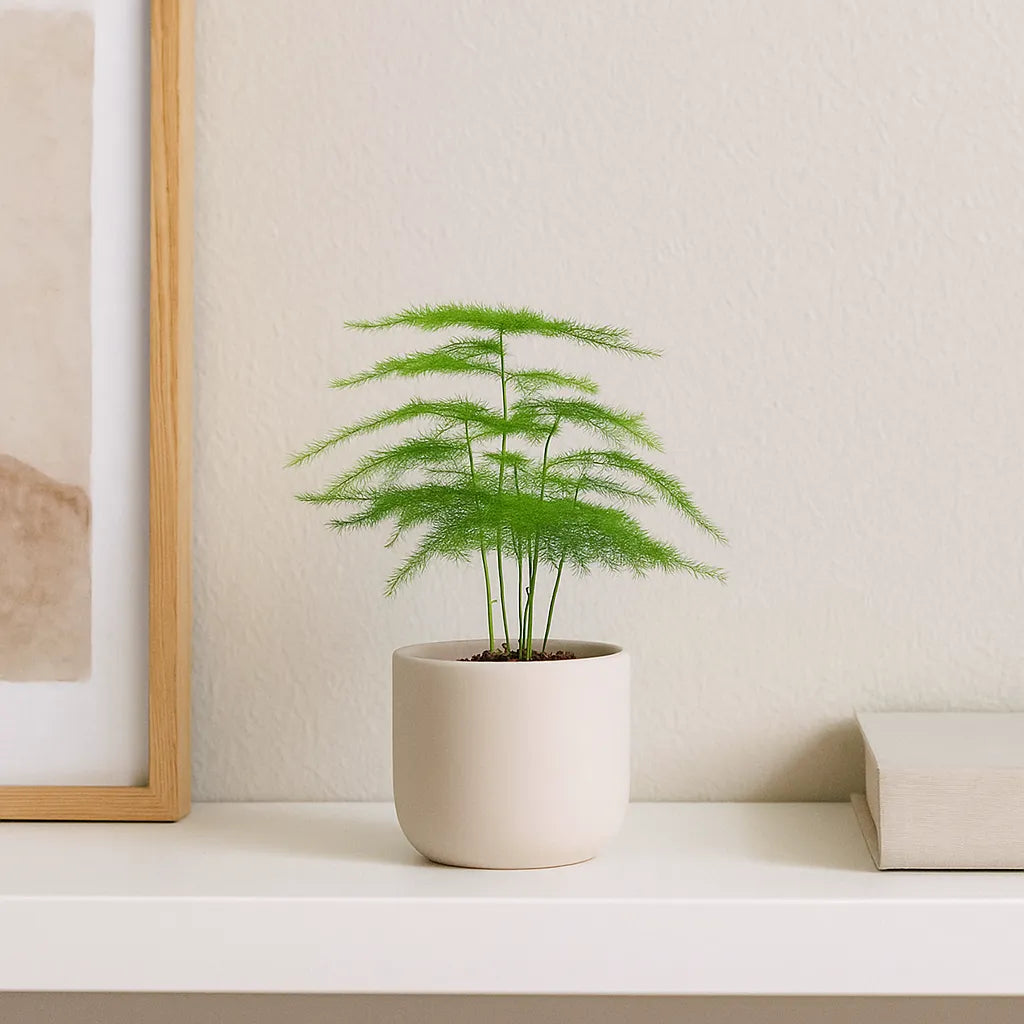
asparagaceae house plants Asparagus Plumosus Fern House Plant 6cm Pot – Plants For All SeasonsAsparagus setaceus Plumosus, also known as the Asparagus Fern Plumosus, Lace Fern, or Climbing Asparagus, is a graceful ornamental plant admired for its delicate, feathery foliage and elegant, airy texture. A member of the Asparagaceae family and native to southern Africa, this species is not a true fern but a soft stemmed perennial with a fern like appearance. The plants fine, needle like cladodes (flattened leaf stems) form light, feathery sprays of
Asparagus setaceus ‘Plumosus’, also known as the Asparagus Fern Plumosus, Lace Fern, or Climbing Asparagus, is a graceful ornamental plant admired for its delicate, feathery foliage and elegant, airy texture. A member of the Asparagaceae family and native to southern Africa, this species is not a true fern but a soft-stemmed perennial with a fern-like appearance.
The plant’s fine, needle-like cladodes (flattened leaf stems) form light, feathery sprays of vibrant green foliage that create a soft, cloud-like effect. As it matures, Asparagus plumosus develops slender arching stems that can climb or trail, making it suitable for hanging baskets, tall planters, or trellised displays. In the right conditions, it may even produce tiny white flowers followed by small, glossy black berries.
Elegant, airy, and timeless, Asparagus setaceus ‘Plumosus’ brings a sense of lightness and sophistication to interiors — an ideal choice for collectors and stylists seeking fine-textured greenery with a touch of vintage charm.
Asparagus setaceus ‘Plumosus’ – Care Guide
Light
Thrives in bright, indirect light. Ample filtered brightness encourages full, lush growth and maintains the vivid green colour. It tolerates some morning or late-afternoon sun but should be shielded from harsh midday rays, which can scorch the delicate foliage. In lower light, growth becomes sparse and less feathery.
Watering
Keep the soil evenly moist but never waterlogged. Water when the top 2–3 cm of soil feels dry to the touch. During spring and summer, the plant prefers steady moisture; in winter, reduce watering frequency while avoiding complete dryness. If the foliage begins to brown or shed, it’s usually a sign of inconsistent watering or low humidity.
Temperature and Humidity
-
Temperature: Prefers 18–26 °C; protect from cold draughts and avoid temperatures below 12 °C.
-
Humidity: Enjoys moderate to high humidity (50–70%). Mist lightly or place near a humidifier, especially in centrally heated environments where air tends to be dry.
Soil and Potting
Use a light, free-draining potting mix such as a blend of compost, perlite, and coco coir or fine bark. The mix should hold gentle moisture while allowing airflow around the roots. Repot every 1–2 years in spring to refresh nutrients and manage root growth — Asparagus plumosus can become root-bound if left too long.
Feeding
Feed every 4–6 weeks in the growing season (spring and summer) with a diluted, balanced liquid fertiliser. Too much fertiliser can cause yellowing or weak stems. Suspend feeding in autumn and winter when the plant’s growth slows naturally.
Pruning and Maintenance
Prune older or yellowing fronds near the base to promote new, soft growth. The fine foliage can be gently combed with fingers to remove dust or spent leaves. If the plant becomes overgrown or leggy, cut it back by one-third in spring — it will regrow vigorously. Handle with care: though delicate in appearance, the stems have tiny thorns.
Growth and Maturity
A moderate to fast grower, Asparagus setaceus ‘Plumosus’ can reach 60–90 cm in height and spread indoors, with trailing stems extending up to 1.5 metres. With support, it will climb gracefully; left to trail, it forms a cascading, cloud-like mass of fine greenery that softens edges and brightens spaces.
Common Issues
-
Yellowing leaves: Overwatering, compact soil, or cold exposure.
-
Browning tips: Low humidity or irregular watering.
-
Sparse growth: Insufficient light.
-
Pests: Occasionally spider mites or aphids; treat promptly with neem oil or insecticidal soap.
Background and Benefits
Asparagus setaceus is native to South Africa, where it grows in forested and scrub habitats as a climbing or scrambling plant. Its finely divided, feathery foliage has made it a decorative favourite since the Victorian era, often used in conservatories and floral arrangements.
In modern interiors, it’s loved for its light, textural quality and air-purifying ability, subtly filtering toxins from the air while adding freshness and volume to plant groupings. Despite its delicate look, it’s a hardy species that adapts easily to indoor conditions, provided it receives consistent light and moisture.
Quick Care Summary
Light: Bright, indirect light; tolerates soft morning sun
Water: Keep soil evenly moist; allow top 2–3 cm to dry before watering
Temperature: 18–26 °C; avoid below 12 °C
Humidity: Moderate to high (50–70%)
Soil: Light, free-draining mix – compost, perlite, coir
Feed: Every 4–6 weeks in spring/summer
Growth: Climbing or trailing habit, 60–90 cm; soft, feathery bright-green foliage
⚠️ Toxicity note: Contains sap that can irritate skin and is toxic if ingested. Keep away from pets and children.
Styling Tip
Display Asparagus setaceus ‘Plumosus’ in a hanging basket, pedestal planter, or decorative pot on a high shelf to highlight its soft, cascading fronds. It pairs beautifully with broader-leafed companions such as Philodendron ‘Birkin’ or Aglaonema ‘White Joy’, adding contrast and texture to tropical groupings. In bright conservatories or minimalist interiors, its airy greenery softens sharp lines and introduces a natural sense of movement — the perfect blend of vintage grace and modern refinement.
Shipping Notes
- Free Standard Shipping on $100+ Orders to the USA.
- Except Preorder products are shipped in 48 hours.
- Delivery to the USA:
- Standard Shipping : 3-10 business days
- If time is of the essence, please consider selecting expedited delivery for faster service.
Exchange/Return Notes
- We offer a 30-day return/exchange service after receiving.
- Final sale items are not eligible for returns or exchanges.
- To process your return/exchange, please contact us at [email protected]
- Please click here for more details>>> Return & Exchange Policy